Keep a Few Good Snacks Within Easy Reach
A useful snack does not need a special product, a decorative shape, or a long recipe. It needs to fit the child’s appetite, abilities, allergies, schedule, and the food available at home. The fifty ideas below offer combinations and small dishes you can rotate without preparing something new every day. They are options for children already able to manage the relevant foods, not an infant feeding plan or a universal safe menu. Adjust texture and size to developmental ability, use pasteurized dairy or appropriate alternatives, follow known allergy instructions, and supervise young children while they sit to eat. Avoid whole nuts, popcorn, hard raw pieces, thick spoonfuls of nut butter, and other choking hazards for young children. Start with several dependable choices, then add variety where it makes life easier rather than turning snack time into another performance.
A: No. Use age-specific infant guidance and professional advice rather than applying the list universally.
A: No. A small practical rotation can be useful.
A: Yes. Preparation, texture, shape, and ability matter.
A: No. Check the actual ingredients and the child's plan.
A: Young children may need vegetables cooked and adapted for safer management.
A: Yes, when the product and preparation suit the child's needs.
A: Offer foods transparently rather than making deception part of the routine.
A: Use appropriate safe chilling and handling arrangements; choose another option if those are unavailable.
A: No. Consider the overall pattern and the child's needs rather than a rigid formula.
A: Seek advice for pain, swallowing concerns, shrinking variety, or persistent intake and growth concerns.
Prepare the Snack for the Child Who Will Eat It
Food names alone do not establish safety. A hard raw piece, a dense sticky mouthful, or a shape that blocks the airway can be hazardous even when the ingredient is nutritious. The CDC choking-hazard guidance explains why preparation and supervision matter. Cook, mash, thinly spread, peel, or otherwise adapt foods as appropriate to the child’s skills and professional advice. Read labels for known allergens and account for cross-contact and school rules. Do not introduce an unfamiliar allergen through a mixed snack when you need an individualized introduction plan. Keep perishable foods safely chilled or handled according to food-safety guidance. These checks apply throughout the list rather than turning every entry into a separate feeding rule. This list is for children already eating varied family foods, with an adult adapting each option to current chewing skills; it is not an infant food-introduction schedule. For serving now, start with familiar yogurt, soft fruit or a ready spread. Pancakes, muffins, polenta and frittata belong in the cook-ahead group unless they are already prepared and safely stored.
1–5: Simple Spreads and Soft Pairings
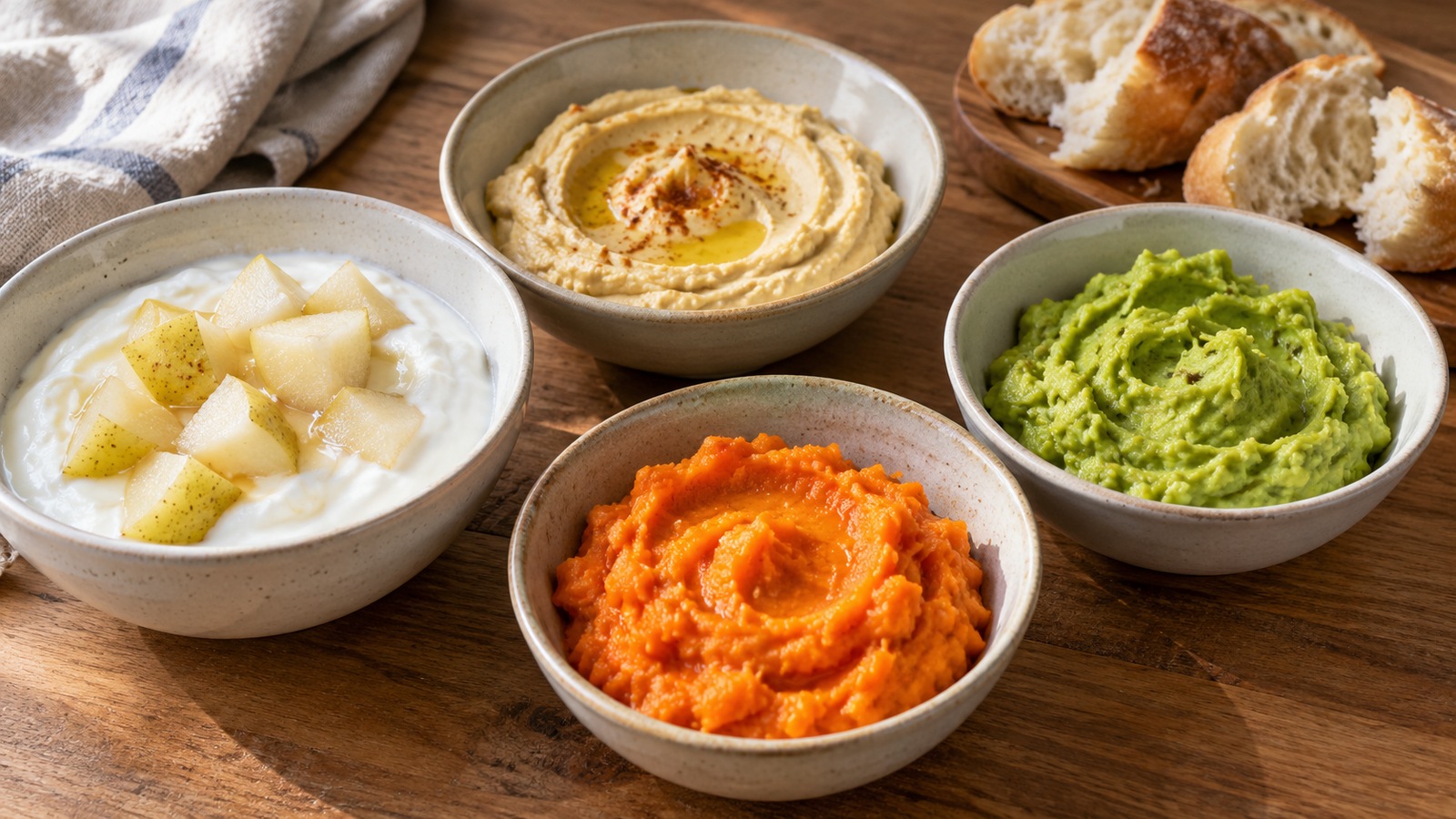
1. Yogurt with soft pear: Stir small, suitable pieces of ripe pear into plain pasteurized yogurt.
2. Cottage cheese with peaches: Pair pasteurized cottage cheese with soft, appropriately prepared peaches.
3. Ricotta toast: Spread pasteurized ricotta thinly on bread that suits the child’s chewing ability. These options can be assembled from familiar ingredients without a new recipe.
4. Hummus with soft pita: Offer a suitable amount of hummus with soft pita prepared in manageable pieces.
5. Avocado toast: Mash ripe avocado and spread it on an appropriate bread base. Check all ingredients against the child’s allergy plan. A spread can add variety, but it should not form an oversized, difficult mouthful.
6–10: Warm Options From Everyday Staples
6. Banana-oat pancake: Use a fully cooked, soft pancake made with familiar ingredients and cut it appropriately.
7. Oatmeal with applesauce: Stir unsweetened applesauce into cooked oats and cool to a safe serving temperature. These can suit a day when a child wants something more substantial than fruit alone.
8. Soft sweet-potato mash: Serve a small portion of thoroughly cooked sweet potato, mashed to a suitable texture.
9. Squash and bean bowl: Combine soft cooked squash with well-mashed beans. Keep seasoning familiar and the portion manageable.
10. Soft polenta strips: Prepare smooth polenta, let it set, and offer soft pieces suitable for the child. Avoid a hard, crisp crust when that would be difficult to manage. Warm snacks do not need to become full meals; choose the amount according to the child’s needs and the next planned eating opportunity.
11–15: Small Savory Snacks
11. Soft cheese quesadilla: Melt suitable pasteurized cheese in a soft tortilla, cool, and cut appropriately.
12. Bean quesadilla: Use well-mashed beans as the filling for a different savory option.
13. Chickpea toast: Spread smooth mashed chickpeas on an appropriate bread base.
14. Thick lentil soup: Offer a small bowl of fully cooked lentils with soft vegetables and a texture the child can manage.
15. Egg-salad sandwich pieces: Combine fully cooked egg with suitable ingredients and serve on soft bread, keeping the snack safely chilled before serving. These choices may work from ingredients already being prepared for the family’s meals. Adjust portions and preparation rather than assuming that a small version of an adult snack automatically suits every child.
16–20: Protein Foods in Manageable Forms
16. Cooked egg strips: Offer fully cooked egg in a soft form and size suited to the child.
17. Soft tofu with a familiar dip: Use ready-to-eat or properly cooked tofu according to the product instructions, adapting texture as needed. Include only ingredients the child can safely eat.
18. Mashed peas with rice: Combine soft rice and mashed cooked peas in a small bowl.
19. Flaked salmon on bread: Use fully cooked salmon, carefully remove bones, and serve in a suitable soft preparation.
20. Shredded chicken tortilla: Place tender, fully cooked finely shredded chicken in a soft tortilla portion. Keep these perishable choices safely stored and serve without hard or oversized pieces.
21–25: Vegetables Beyond Hard Raw Sticks
21. Carrot mash with soft toast: Cook carrots until soft, mash, and offer with an appropriate bread accompaniment.
22. Chopped cooked broccoli: Serve very tender broccoli in a form the child can manage, with a familiar dip if wanted.
23. Soft zucchini pieces: Cook zucchini until tender and prepare it for the child’s abilities.
24. Roasted pepper strips: Use soft, appropriately prepared roasted pepper, removing skin if needed for the child. A new vegetable can be offered in a small amount without making eating it a condition for another food.
25. Tender green beans: Cook until soft and cut or otherwise adapt them appropriately. Do not substitute hard raw vegetables simply because they are faster to prepare. A batch of safely stored cooked vegetables can make several future snacks easier.
26–30: Grain-Based Choices That Can Be Made Ahead
26. Soft whole-grain mini muffin: Choose a familiar recipe without whole nuts or hard inclusions, and adapt the serving.
27. Soft baked oat square: Prepare a tender oat snack with suitable ingredients, avoiding dense sticky chunks. These can be portioned ahead so the everyday task is mostly serving.
28. Plain waffle pieces: Use a soft, fully cooked waffle with a suitable texture and topping.
29. Rice pudding: Offer a small portion made with ingredients appropriate to the child and kept safely chilled.
30. Pasta with mashed beans: Combine well-cooked pasta and smooth mashed beans for a savory alternative. Convenience should reduce preparation work without bypassing texture or storage checks.
31–35: Fruit With Different Textures and Flavors
31. Ripe banana: Mash or prepare a soft banana in an appropriate form.
32. Soft mango: Remove the peel and pit and adapt ripe mango for the child.
33. Ripe kiwi: Peel and serve in a manageable form, avoiding pieces unsuitable for the child’s skills.
34. Stewed apple: Cook apple until soft instead of offering hard raw chunks to a young child.
35. Soft plum: Remove the pit and prepare the ripe flesh appropriately. Fruit choices can rotate with cost and season. Keep the serving practical, and do not assume that a naturally sweet food needs a sugary dip or elaborate presentation to be acceptable.
36–40: Useful Pantry and Refrigerator Fruit Options
36. Unsweetened applesauce: Serve in a bowl with a suitable utensil rather than making portable packaging essential.
37. Mashed berries with yogurt: Mash berries as needed and combine with pasteurized yogurt that fits the allergy plan.
38. Ripe nectarine: Remove the stone and prepare soft flesh to suit the child.
39. Thin, soft melon pieces: Use ripe melon in a suitable shape, avoiding round melon balls for young children. The texture and preparation remain more important than a decorative cut.
40. Soft canned pears: Choose a suitable canned option, drain as appropriate, and adapt the pieces. Pantry fruit can be a practical choice when fresh fruit is expensive or likely to spoil. Check packaging and ingredients for any needs specific to the child.
41–45: Mix-and-Match Small Bowls and Spreads
41. Yogurt with softened oats and banana: Combine familiar ingredients, allowing oats to soften and keeping the mixture safely chilled.
42. Cottage-cheese avocado dip: Mash ripe avocado with suitable pasteurized cottage cheese and serve with an appropriate soft accompaniment.
43. Smooth beet hummus: Blend fully cooked beet into a familiar hummus if the ingredients are safe for the child.
44. Ricotta with sweet potato: Combine soft cooked sweet potato and pasteurized ricotta.
45. Black-bean spread with soft cornbread: Use smooth mashed beans and a tender cornbread without hard inclusions. These are optional combinations, not a requirement to disguise ingredients or persuade a child to eat unknowingly.
46–50: Five More Options for the Rotation
46. Mashed edamame spread: Fully cook, shell, and thoroughly mash edamame, using a preparation appropriate to the child.
47. Thin peanut-butter banana toast: If peanut is safe under the child’s plan, spread smooth peanut butter thinly and add suitably prepared banana. Never offer a thick spoonful as a young child’s snack.
48. Thin sunflower-seed-butter bread: Use a permitted smooth spread in a thin layer on an appropriate bread base. A seed product is not automatically safe for every allergy, so check the actual ingredients and rules.
49. Savory oats with mashed peas: Combine cooked oats and soft mashed peas in a small bowl.
50. Soft spinach frittata: Use fully cooked egg with finely prepared cooked spinach and serve a cooled, suitable portion. The list offers choices; you do not need to make all fifty or introduce several unfamiliar foods at once.
Choose a Small Repeatable Snack Rotation
Select a few options that fit the household’s budget, equipment, and storage. One dependable fruit choice, one savory option, and something that can be prepared ahead may be enough to simplify the week. Add variety where it helps rather than creating waste.
Invite the child to choose between two workable options or help with a safe preparation job. Keep the next meal in mind, while responding appropriately to hunger and any medical plan. The AAP toddler feeding guidance treats snacks as meaningful eating opportunities within a regular pattern. If eating is painful, the range of accepted foods is shrinking, or intake and growth are concerning, ask for professional advice instead of relying on a larger idea list.
Prepare Ahead Without Creating Extra Waste
Begin with the amount the household is likely to use and a clear storage plan. A large batch is not automatically more efficient if the child will not eat it or the family cannot store it safely. Cook or assemble one familiar option, divide it into suitable portions, and keep the handling instructions available to the adults who will serve it. When a perishable snack will travel, arrange appropriate chilling before choosing that option. If that arrangement is unavailable, select a suitable alternative instead of hoping the food will remain safe.
Let the child help with a task matched to their abilities, such as choosing a plain bowl, stirring a safe mixture, or placing prepared food in a container. Keep adult responsibility for food safety and allergy checks. Participation should not create an obligation to taste the result, and a declined snack is not a reason to withdraw all familiar options. Use the information to adjust the amount or timing next time. A rotation works best when it reduces the daily workload while preserving appropriate feeding opportunities.
Keep a short list of the snacks that actually work in different situations: something for home, something that travels safely, and something that can be served with very little preparation. You can revisit the list when schedules, appetite, or developmental skills change. There is no need to pursue novelty for its own sake. Dependable options, offered respectfully and prepared appropriately, can be a stronger foundation than a constantly changing menu that leaves everyone tired.