A Command Center Works Only If the Family Uses It
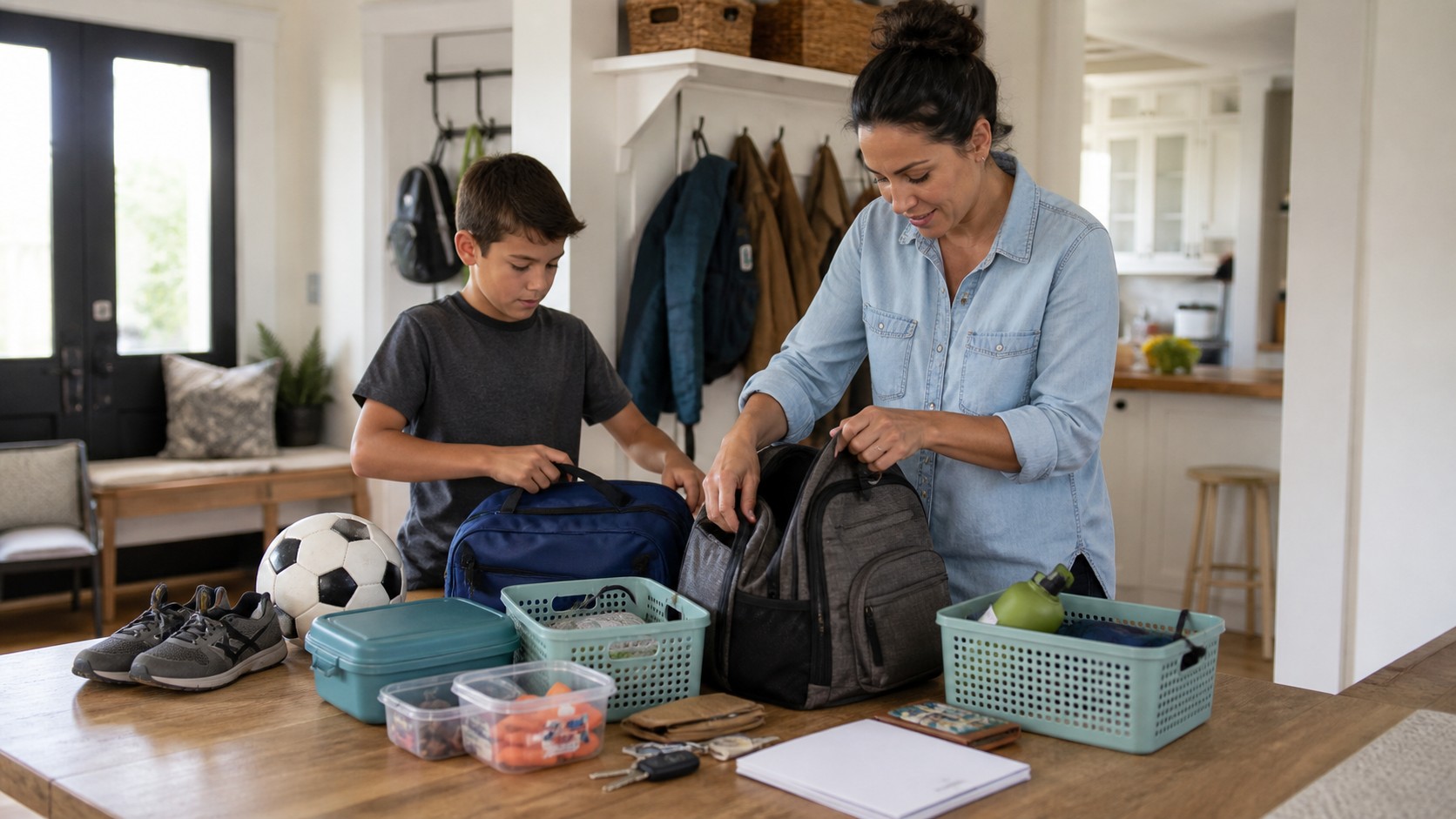
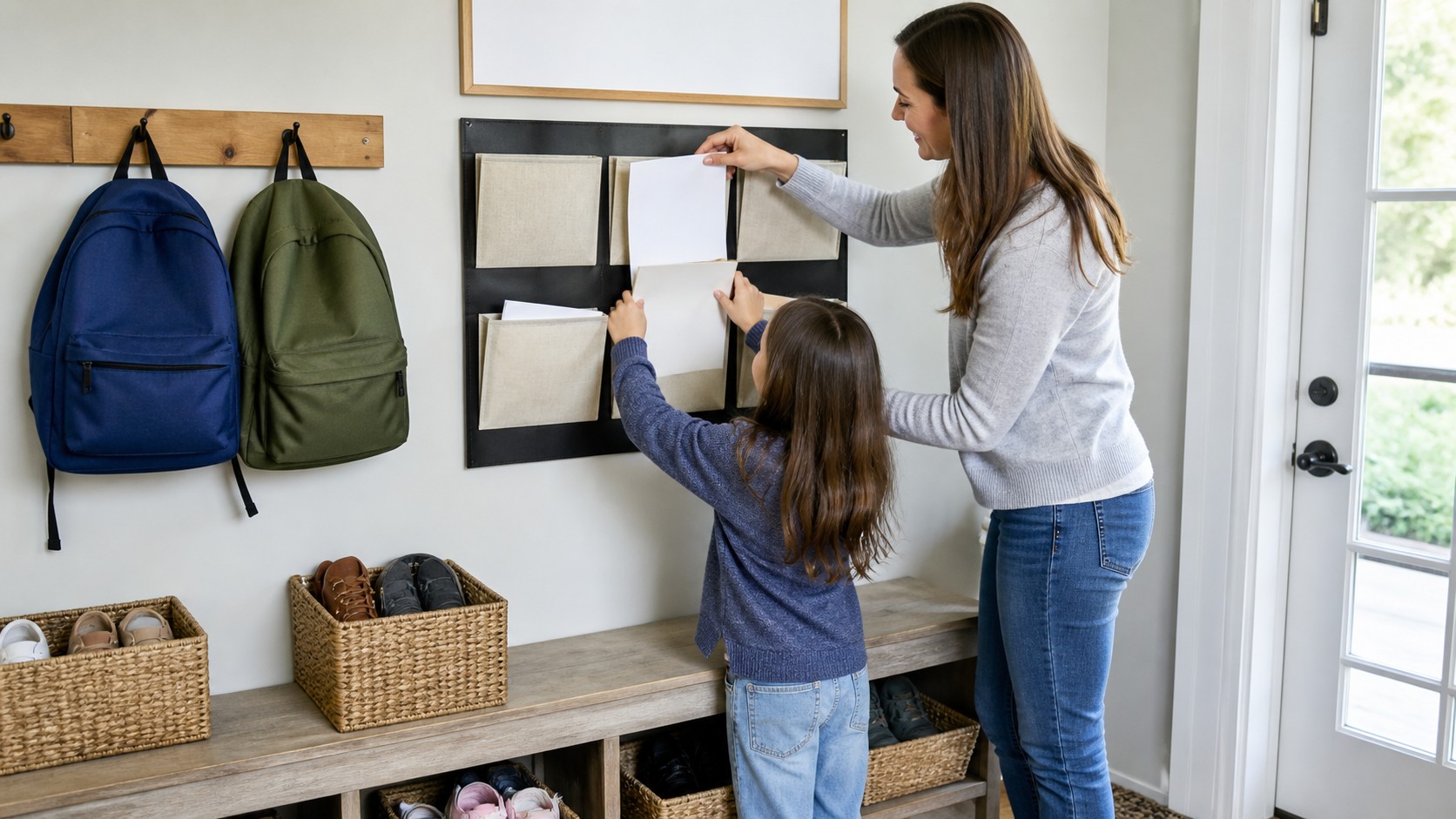
Family command center ideas are useful when they solve real household traffic problems: papers that disappear, backpacks that scatter, shoes that block the door, mail that piles up, and dates that live in only one parent's mind. The best command center is not the prettiest wall. It is the one placed where family life actually moves, with simple zones that make the next step obvious.
A: Begin with one repeated friction point and choose a change small enough to test this week.
A: Lower the demand, clarify the next step, and check whether the system asks too much at the wrong time.
A: Make the work visible and assign ownership rather than vague help.
A: Give children a concrete task they can see, repeat, and complete without constant explanation.
A: Place it near the moment the problem happens, not where it looks best.
A: Review after a few tries and again when school, work, activities, or development changes.
A: Use what you own first unless a small purchase clearly removes repeated friction.
A: It is too big when setup, cleanup, or reminders create more stress than the original problem.
A: Give younger kids simple participation and older kids meaningful choice or responsibility.
A: A visible cue, a forgiving standard, and a willingness to revise the system keep it alive.
Start With the Real Pressure Point
Start With the Real Pressure Point helps parents make family command center ideas that actually keep your household organized feel less like a vague improvement project and more like a workable family system. A useful system begins where the same problem keeps stealing time or patience. The aim is not to control every variable in the household. The aim is to make the next ordinary day easier to enter, easier to repair, and easier to repeat.
The command center lens keeps the advice tied to real schedules, real children, and the amount of adult energy available. Parents can start by naming the friction point, choosing one visible support, and deciding what can be ignored for now. A smaller change used consistently usually helps more than a beautiful plan that depends on everyone being rested, cheerful, and perfectly cooperative.
After the family tests the idea, the most useful question is what became lighter and what quietly became harder. If the system saves time but creates conflict, adjust the roles. If it looks tidy but nobody uses it, move it closer to the moment of need. Good family plans are allowed to be plain, flexible, and revised without drama.
Make the System Visible
Make the System Visible helps parents make family command center ideas that actually keep your household organized feel less like a vague improvement project and more like a workable family system. Visibility lets the responsibility move out of one adult's memory and into the shared environment. The aim is not to control every variable in the household. The aim is to make the next ordinary day easier to enter, easier to repair, and easier to repeat.
The command center lens keeps the advice tied to real schedules, real children, and the amount of adult energy available. Parents can start by naming the friction point, choosing one visible support, and deciding what can be ignored for now. A smaller change used consistently usually helps more than a beautiful plan that depends on everyone being rested, cheerful, and perfectly cooperative.
Protect the Adult Workload
Protect the Adult Workload helps parents make family command center ideas that actually keep your household organized feel less like a vague improvement project and more like a workable family system. Children learn the pattern when the cue, role, and ending are simple enough to repeat. The aim is not to control every variable in the household. The aim is to make the next ordinary day easier to enter, easier to repair, and easier to repeat.
The command center lens keeps the advice tied to real schedules, real children, and the amount of adult energy available. Parents can start by naming the friction point, choosing one visible support, and deciding what can be ignored for now. A smaller change used consistently usually helps more than a beautiful plan that depends on everyone being rested, cheerful, and perfectly cooperative.
After the family tests the idea, the most useful question is what became lighter and what quietly became harder. If the system saves time but creates conflict, adjust the roles. If it looks tidy but nobody uses it, move it closer to the moment of need. Good family plans are allowed to be plain, flexible, and revised without drama.
Give Children Clear Roles
Give Children Clear Roles helps parents make family command center ideas that actually keep your household organized feel less like a vague improvement project and more like a workable family system. A useful system begins where the same problem keeps stealing time or patience. The aim is not to control every variable in the household. The aim is to make the next ordinary day easier to enter, easier to repair, and easier to repeat.
The command center lens keeps the advice tied to real schedules, real children, and the amount of adult energy available. Parents can start by naming the friction point, choosing one visible support, and deciding what can be ignored for now. A smaller change used consistently usually helps more than a beautiful plan that depends on everyone being rested, cheerful, and perfectly cooperative.
After the family tests the idea, the most useful question is what became lighter and what quietly became harder. If the system saves time but creates conflict, adjust the roles. If it looks tidy but nobody uses it, move it closer to the moment of need. Good family plans are allowed to be plain, flexible, and revised without drama.
Build Around Existing Routines
Build Around Existing Routines helps parents make family command center ideas that actually keep your household organized feel less like a vague improvement project and more like a workable family system. Visibility lets the responsibility move out of one adult's memory and into the shared environment. The aim is not to control every variable in the household. The aim is to make the next ordinary day easier to enter, easier to repair, and easier to repeat.
The command center lens keeps the advice tied to real schedules, real children, and the amount of adult energy available. Parents can start by naming the friction point, choosing one visible support, and deciding what can be ignored for now. A smaller change used consistently usually helps more than a beautiful plan that depends on everyone being rested, cheerful, and perfectly cooperative.
Use Small Resets Instead of Overhauls
Use Small Resets Instead of Overhauls helps parents make family command center ideas that actually keep your household organized feel less like a vague improvement project and more like a workable family system. Children learn the pattern when the cue, role, and ending are simple enough to repeat. The aim is not to control every variable in the household. The aim is to make the next ordinary day easier to enter, easier to repair, and easier to repeat.
The command center lens keeps the advice tied to real schedules, real children, and the amount of adult energy available. Parents can start by naming the friction point, choosing one visible support, and deciding what can be ignored for now. A smaller change used consistently usually helps more than a beautiful plan that depends on everyone being rested, cheerful, and perfectly cooperative.
After the family tests the idea, the most useful question is what became lighter and what quietly became harder. If the system saves time but creates conflict, adjust the roles. If it looks tidy but nobody uses it, move it closer to the moment of need. Good family plans are allowed to be plain, flexible, and revised without drama.
Handle Resistance Kindly
Handle Resistance Kindly helps parents make family command center ideas that actually keep your household organized feel less like a vague improvement project and more like a workable family system. A useful system begins where the same problem keeps stealing time or patience. The aim is not to control every variable in the household. The aim is to make the next ordinary day easier to enter, easier to repair, and easier to repeat.
The command center lens keeps the advice tied to real schedules, real children, and the amount of adult energy available. Parents can start by naming the friction point, choosing one visible support, and deciding what can be ignored for now. A smaller change used consistently usually helps more than a beautiful plan that depends on everyone being rested, cheerful, and perfectly cooperative.
After the family tests the idea, the most useful question is what became lighter and what quietly became harder. If the system saves time but creates conflict, adjust the roles. If it looks tidy but nobody uses it, move it closer to the moment of need. Good family plans are allowed to be plain, flexible, and revised without drama.
Keep the Plan Flexible
Keep the Plan Flexible helps parents make family command center ideas that actually keep your household organized feel less like a vague improvement project and more like a workable family system. Visibility lets the responsibility move out of one adult's memory and into the shared environment. The aim is not to control every variable in the household. The aim is to make the next ordinary day easier to enter, easier to repair, and easier to repeat.
The command center lens keeps the advice tied to real schedules, real children, and the amount of adult energy available. Parents can start by naming the friction point, choosing one visible support, and deciding what can be ignored for now. A smaller change used consistently usually helps more than a beautiful plan that depends on everyone being rested, cheerful, and perfectly cooperative.
Notice What Gets Easier
Notice What Gets Easier helps parents make family command center ideas that actually keep your household organized feel less like a vague improvement project and more like a workable family system. Children learn the pattern when the cue, role, and ending are simple enough to repeat. The aim is not to control every variable in the household. The aim is to make the next ordinary day easier to enter, easier to repair, and easier to repeat.
The command center lens keeps the advice tied to real schedules, real children, and the amount of adult energy available. Parents can start by naming the friction point, choosing one visible support, and deciding what can be ignored for now. A smaller change used consistently usually helps more than a beautiful plan that depends on everyone being rested, cheerful, and perfectly cooperative.
After the family tests the idea, the most useful question is what became lighter and what quietly became harder. If the system saves time but creates conflict, adjust the roles. If it looks tidy but nobody uses it, move it closer to the moment of need. Good family plans are allowed to be plain, flexible, and revised without drama.
Let the System Mature
Let the System Mature helps parents make family command center ideas that actually keep your household organized feel less like a vague improvement project and more like a workable family system. A useful system begins where the same problem keeps stealing time or patience. The aim is not to control every variable in the household. The aim is to make the next ordinary day easier to enter, easier to repair, and easier to repeat.
The command center lens keeps the advice tied to real schedules, real children, and the amount of adult energy available. Parents can start by naming the friction point, choosing one visible support, and deciding what can be ignored for now. A smaller change used consistently usually helps more than a beautiful plan that depends on everyone being rested, cheerful, and perfectly cooperative.
After the family tests the idea, the most useful question is what became lighter and what quietly became harder. If the system saves time but creates conflict, adjust the roles. If it looks tidy but nobody uses it, move it closer to the moment of need. Good family plans are allowed to be plain, flexible, and revised without drama.