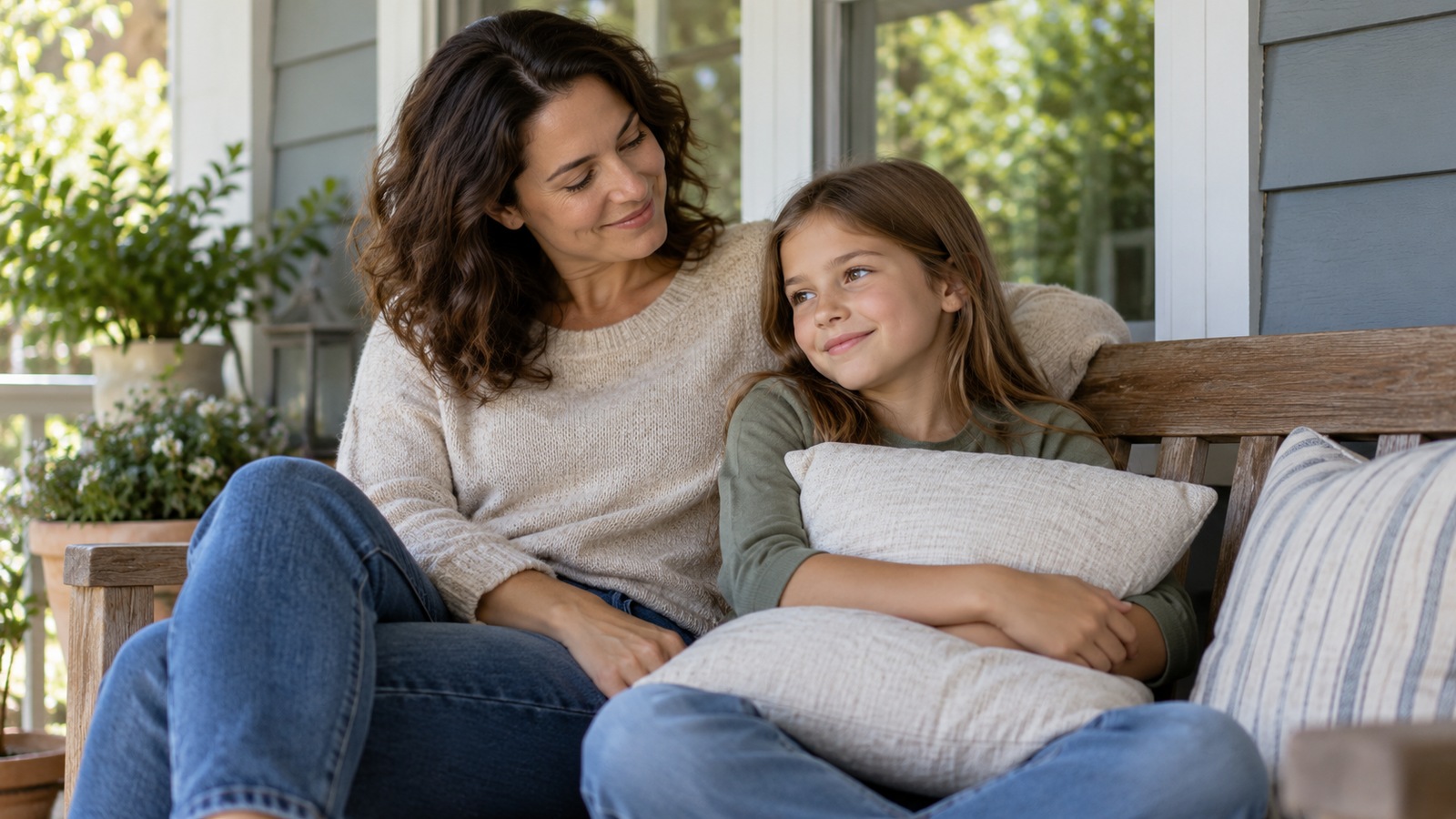
Offer Calm Support Before Asking for a Perfect Explanation
When anxiety rises, a child may not be ready to explain the fear, choose among many strategies, or accept a lecture about why everything will be fine. Begin with safety, connection, and one manageable offer. The fifteen approaches below are options to try thoughtfully, not a guarantee that every child will settle with every technique. Preferences, age, sensory needs, medical circumstances, and an existing treatment plan all matter. A strategy should help your child regain enough steadiness to connect with the next step; it should not become another task they can fail. If anxiety repeatedly interferes with school, sleep, relationships, or ordinary activities, seek appropriate professional assessment rather than relying on calming techniques alone. During an apparent medical emergency or immediate safety crisis, obtain urgent local help instead of assuming the symptoms are simply anxiety.
A: No. Offer another suitable option if breathing exercises are uncomfortable or unhelpful.
A: Offer touch only when welcome; the child's response matters in this moment.
A: No. A simple optional focus on a neutral present detail may be enough.
A: A safe familiar movement may fit better than stillness.
A: The appropriate next step depends on safety, the situation, and the child's support plan.
A: It may, when appropriate and coordinated with the setting and any clinician guidance.
A: It may mean the tool is poorly matched or too demanding; reconsider the offer.
A: Seek individualized guidance while maintaining warmth rather than abruptly removing comfort.
A: Concerning physical symptoms, an emergency, or persistent impairment require appropriate professional assessment.
A: Familiarity can make an option easier to use later without adding a new learning demand during distress.
1. Reduce the Number of Words
Give one short, clear message instead of a stream of explanations. A child who is overwhelmed may struggle to process several instructions at once. You can state that you are nearby and identify the immediate next action, then allow a pause. For example, say, ‘I’m here. We can sit by the doorway for a moment.’ Pause before offering a choice such as, ‘Would you like me beside you or a little farther away?’ If the offer is unwelcome, stop adding techniques and check what the child needs. A quiet response is an option, not proof that one method works for every child.
Keep your tone steady and your language concrete. Avoid rapid questions about why the child is upset or repeated demands to calm down. You are making the interaction easier to follow, not withholding conversation permanently. A fuller discussion can happen later, when the child has more room to think and respond.
2. Lower Unnecessary Stimulation
If the environment is loud, crowded, or demanding, offer a quieter place when it is safe and appropriate. Ask or signal the change simply rather than turning the move into another negotiation. Some children prefer an adult nearby; others need a little space with predictable supervision. Notice what helps this child instead of assuming that silence or isolation is universally calming. A quieter setting does not solve the source of anxiety by itself, but it can remove extra demands while the child regains steadiness. In school or public settings, coordinate with the responsible adults and preserve a clear plan for support and participation.
3. Sit Nearby Without Demanding a Response
Calm presence can be useful when a child cannot yet use words. Sit at a comfortable distance, avoid crowding, and let the child know that help is available. Offer touch only when it is welcome; an unwanted hug can add to the sense of overwhelm.
Watch the child’s cues and adjust. Being supportive does not require continuous talking or insisting on eye contact. A predictable adult who stays attentive can make the next offer easier to accept. If behavior creates immediate danger, prioritize safety and appropriate help rather than relying on quiet presence alone.
4. Model Comfortable, Unforced Breathing
You can slow your own breathing and invite the child to join if it feels helpful. Keep the breaths comfortable rather than exaggerated or forced. Avoid long holds, competitive counting, or instructions that make the child feel they are doing breathing incorrectly.
Some children dislike focusing on breathing, especially when already worried about bodily sensations. Offer another option without treating the refusal as resistance to help.
New or severe breathing difficulty, fainting, chest symptoms, or other concerning physical changes need appropriate medical assessment. Do not use a breathing exercise to delay care or decide that a symptom must be anxiety. A clinician who knows the child can help identify suitable strategies when body-focused exercises are complicated.
5. Notice a Few Neutral Things in the Room
Invite attention toward something ordinary and present: a color on the wall, the texture of a chair, or the shape of an object. Keep the task simple and optional. The child does not need to complete a formal sensory checklist or name a particular number of things for the exercise to count. You might quietly describe one thing you notice and see whether they want to add another. If the setting itself feels unsafe, address the real concern rather than using distraction to dismiss it. Grounding is a way to orient attention, not a claim that the child’s problem is imaginary.
6. Feel a Stable Point of Contact
A child may find it useful to notice feet on the floor, a back against the chair, or hands resting on a table. You can demonstrate the action and ask whether it feels comfortable. Choose a position that suits the child’s mobility and sensory preferences.
Avoid rigid posture rules or language that treats stillness as proof of success. Some children settle more readily while moving gently. The purpose is a manageable physical reference point, not a demand that the body look calm before support is offered.
7. Offer Familiar, Gentle Movement
A short walk with an adult, an easy stretch, or another familiar movement may feel better than sitting still. Choose something safe and ordinary, with no pressure to perform or exhaust the feeling away. If movement is uncomfortable, medically unsuitable, or escalating the situation, stop and choose a different response. The child should not have to earn attention by completing an exercise. Use the activity to support regulation and connection, then return to the practical issue when appropriate. For persistent anxiety, ask the treating professional how movement fits the broader plan rather than treating it as the entire intervention.
8. Give the Hands a Simple Job
Offer an age-appropriate, familiar activity such as squeezing a soft object, folding a cloth, or arranging a few safe materials. Avoid introducing a complicated craft that adds decisions and frustration. A predictable hand activity may provide something manageable to do while emotions are high.
Check safety, including small-part and choking risks for younger children. Do not force a sensory object on a child who dislikes it. The useful information is whether the activity makes the moment easier for this child. A popular calming product is not necessary for a supportive response.
9. Bring a Familiar Comfort Item
A suitable comfort item can make an unfamiliar transition feel more predictable. Ask what the item means to the child and whether it actually helps. Follow age-appropriate safety guidance and setting rules.
Plan ahead when possible, so the item is available before a difficult transition. A small familiar object may be easier to manage than a last-minute search through the house.
If anxiety becomes increasingly dependent on an expanding set of rituals or objects, discuss the pattern with a qualified clinician. Do not abruptly remove a support to prove independence, but do not assume that every new requirement should become permanent. The broader goal is supported participation and growing flexibility.
10. Name the Feeling Tentatively
You might say that the child seems worried or that the situation looks hard, leaving room for correction. A child may identify anger, embarrassment, sensory overload, or another experience rather than the emotion you expected. Avoid insisting that your label is the true explanation. Naming a feeling can support understanding, but it is not a test the child must complete before receiving help. If talking makes the moment harder, return to a simpler offer and revisit the conversation later. The AAP’s guidance on big feelings describes supportive emotion coaching as part of a broader relationship.
11. Make the Next Step Predictable
Uncertainty can add difficulty to an already upsetting moment. Explain the immediate sequence in concrete terms, such as sitting together briefly and then approaching a trusted adult. Avoid describing an entire day of possible challenges at once.
Keep promises realistic. Do not guarantee that a feared outcome is impossible when you cannot know that. Tell the child what support is available and what the adults will do if a problem occurs. Predictability is more useful when it is believable and connected to the actual setting.
12. Offer One Small Choice
A limited choice can give the child a manageable role: sit beside you or across from you, carry the folder or let you carry it, speak first or have you begin. Both options should be acceptable and appropriate. Avoid asking the child to choose among ten coping strategies or decide whether an essential safety step is necessary. A choice is an invitation to participate, not a disguised threat with one obviously punishable answer. If even a small choice is too much, provide gentle adult guidance and return to more participation when the child can manage it.
13. Address an Ordinary Physical Need
Hunger, thirst, fatigue, or discomfort may add to distress. When the child is alert and can swallow normally, an appropriate drink or snack may be useful if it fits the situation. Do not force intake or use food as the only response to an emotional need.
Consider the context rather than assuming every anxious moment has a simple physical explanation. A child with repeated symptoms needs appropriate assessment and a broader support plan. Meeting an ordinary need can make the moment more manageable while leaving the underlying concern available for attention.
Give the Supporting Adult Room to Reset
Parents can become tense when a child is distressed, especially if the same situation has happened many times. Notice your own pace, voice, and urge to solve everything immediately. If another responsible adult is available, a brief handoff may help you return with a steadier response. When you are the only adult, keep supervision appropriate and simplify the interaction rather than trying to deliver every strategy at once. You can acknowledge later that you became hurried or frustrated and explain what you will try differently. That repair models the idea that people can recover and adjust without pretending the difficult moment never happened. Seek support for your own stress when needed, while keeping the child free from responsibility for making you feel better. A calmer adult response is a practical contribution to the situation, not a demand that parents remain perfectly composed at all times.
14. Use a Brief Connection Phrase
Choose a believable phrase that communicates support, such as saying you will work through the next part together. Keep it consistent enough to be familiar, without repeating it mechanically after the child has stopped finding it useful.
A supportive phrase should not promise that nothing bad will ever happen or demand immediate bravery. It can acknowledge discomfort and point toward the help available.
If reassurance becomes a repeated loop that does not lead to relief or participation, ask a clinician how to respond. Avoid suddenly withholding all comfort based on a general tip. Effective support balances warmth with a plan tailored to the child, particularly when anxiety is persistent or severe.
15. Revisit the Moment After Recovery
Later, ask what helped, what added pressure, and what the child would like adults to understand next time. Keep the review brief and curious. It is not a hearing to decide whether the child behaved well enough to deserve support. Record a useful preference or coordinate with the school if the situation is likely to recur. The AACAP anxiety resource center emphasizes recognizing significant anxiety and obtaining appropriate help. Calming strategies can support a moment, but repeated impairment calls for a plan that addresses the pattern. Use what you learn to make the next experience clearer, safer, and more manageable.
Choose a Small Repertoire Together
Practice a few acceptable options during calm periods so the child is not learning every step while distressed. Notice which approaches fit different settings and which the child dislikes. A strategy that works at home may need adjustment at school or in public.
Adults can agree on a consistent, respectful response while leaving room for the child’s preferences and professional guidance. If distress grows, functioning narrows, or physical symptoms are concerning, seek appropriate assessment. The purpose of these tools is to support the child, not to delay needed care or produce a performance of calm.