
Sustainable Family Living Starts With Repeatable Habits
Sustainable living for families works best when it is simple, visible, and connected to routines children already understand. A home does not become greener through one perfect overhaul. It changes through repeated choices around food, energy, waste, water, transportation, repairs, and buying less of what the family does not need. Small habits count when they are practical enough to keep.
A: Start with the smallest change that can happen on an ordinary day, then repeat it before adding more.
A: Offer a limited choice, make the first step brief, and avoid turning participation into a lecture.
A: The plan is too complicated when adults dread setting it up or cleanup creates new conflict.
A: Give younger children a concrete job and older children more choice or responsibility.
A: Skip anything that requires buying, reorganizing, or persuading everyone before the family has tested a simple version.
A: Review it after a few attempts, especially if schedules, moods, costs, or school demands change.
A: Yes, if the plan uses flexible materials, clear storage, and short routines that do not depend on extra rooms.
A: A visible cue, a predictable moment, and an adult who is willing to keep the standard realistic.
A: Set turns, define shared materials, and choose cooperative roles when competition is making things worse.
A: Treat the first try as information and redesign the next attempt around what your family actually showed you.
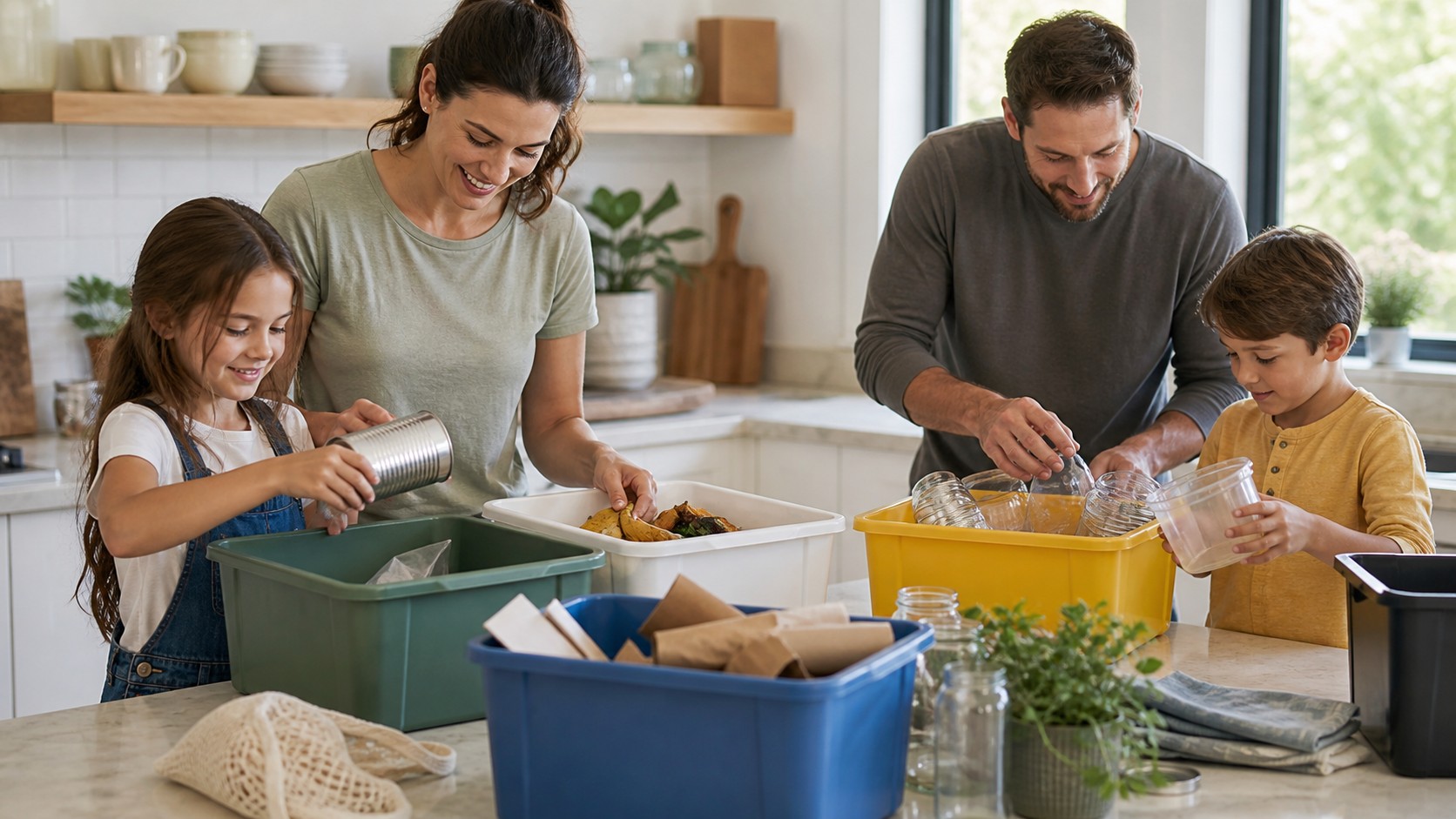
Start with the trash can
Household waste shows where the easiest changes may be hiding: uneaten food, packaging, paper towels, broken toys, and impulse purchases. Green home changes last when they attach to routines the family already repeats. Parents can use this part of the decision to move from a vague wish into a practical plan. The stronger plan usually names the child who needs the most support, the adult capacity available that week, and the tradeoff the family is willing to accept.
Pick one pattern and improve it before adding another project. This is where families protect the ordinary details that make the idea livable: meals, sleep, transitions, cost, space, transportation, and the emotional weather of the people involved. When those details are handled early, children are more likely to experience the choice as steady instead of as another adult project they must adapt to.
Children learn more from one habit they practice than from a long speech about caring for the planet. The goal is not to make the choice look impressive from the outside. The goal is to build a pattern the family can repeat, review, and soften when life changes.
Make the Habit Easy to Begin
Make the Habit Easy to Begin helps families apply sustainable living for families: 25 easy ways to go green at home without pretending every household has the same space, budget, or schedule. Green home changes last when they attach to routines the family already repeats. Parents can use this part of the decision to move from a vague wish into a practical plan. The stronger plan usually names the child who needs the most support, the adult capacity available that week, and the tradeoff the family is willing to accept.
Use the green home changes last when they attach to routines the family already repeats. lens to decide what belongs in the plan this week and what can wait. This is where families protect the ordinary details that make the idea livable: meals, sleep, transitions, cost, space, transportation, and the emotional weather of the people involved. When those details are handled early, children are more likely to experience the choice as steady instead of as another adult project they must adapt to.
Protect the Parent Workload
Protect the Parent Workload helps families apply sustainable living for families: 25 easy ways to go green at home without pretending every household has the same space, budget, or schedule. Green home changes last when they attach to routines the family already repeats. Parents can use this part of the decision to move from a vague wish into a practical plan. The stronger plan usually names the child who needs the most support, the adult capacity available that week, and the tradeoff the family is willing to accept.
Use the green home changes last when they attach to routines the family already repeats. lens to decide what belongs in the plan this week and what can wait. This is where families protect the ordinary details that make the idea livable: meals, sleep, transitions, cost, space, transportation, and the emotional weather of the people involved. When those details are handled early, children are more likely to experience the choice as steady instead of as another adult project they must adapt to.
If the approach starts creating more friction than benefit, make it smaller before abandoning it. The goal is not to make the choice look impressive from the outside. The goal is to build a pattern the family can repeat, review, and soften when life changes.
Include Different Ages Without Forcing It
Include Different Ages Without Forcing It helps families apply sustainable living for families: 25 easy ways to go green at home without pretending every household has the same space, budget, or schedule. Green home changes last when they attach to routines the family already repeats. Parents can use this part of the decision to move from a vague wish into a practical plan. The stronger plan usually names the child who needs the most support, the adult capacity available that week, and the tradeoff the family is willing to accept.
Use the green home changes last when they attach to routines the family already repeats. lens to decide what belongs in the plan this week and what can wait. This is where families protect the ordinary details that make the idea livable: meals, sleep, transitions, cost, space, transportation, and the emotional weather of the people involved. When those details are handled early, children are more likely to experience the choice as steady instead of as another adult project they must adapt to.
If the approach starts creating more friction than benefit, make it smaller before abandoning it. The goal is not to make the choice look impressive from the outside. The goal is to build a pattern the family can repeat, review, and soften when life changes.
Use the Environment You Already Have
Use the Environment You Already Have helps families apply sustainable living for families: 25 easy ways to go green at home without pretending every household has the same space, budget, or schedule. Green home changes last when they attach to routines the family already repeats. Parents can use this part of the decision to move from a vague wish into a practical plan. The stronger plan usually names the child who needs the most support, the adult capacity available that week, and the tradeoff the family is willing to accept.
Use the green home changes last when they attach to routines the family already repeats. lens to decide what belongs in the plan this week and what can wait. This is where families protect the ordinary details that make the idea livable: meals, sleep, transitions, cost, space, transportation, and the emotional weather of the people involved. When those details are handled early, children are more likely to experience the choice as steady instead of as another adult project they must adapt to.
Keep Costs and Cleanup Visible
Keep Costs and Cleanup Visible helps families apply sustainable living for families: 25 easy ways to go green at home without pretending every household has the same space, budget, or schedule. Green home changes last when they attach to routines the family already repeats. Parents can use this part of the decision to move from a vague wish into a practical plan. The stronger plan usually names the child who needs the most support, the adult capacity available that week, and the tradeoff the family is willing to accept.
Use the green home changes last when they attach to routines the family already repeats. lens to decide what belongs in the plan this week and what can wait. This is where families protect the ordinary details that make the idea livable: meals, sleep, transitions, cost, space, transportation, and the emotional weather of the people involved. When those details are handled early, children are more likely to experience the choice as steady instead of as another adult project they must adapt to.
If the approach starts creating more friction than benefit, make it smaller before abandoning it. The goal is not to make the choice look impressive from the outside. The goal is to build a pattern the family can repeat, review, and soften when life changes.
Let Children Have a Real Role
Let Children Have a Real Role helps families apply sustainable living for families: 25 easy ways to go green at home without pretending every household has the same space, budget, or schedule. Green home changes last when they attach to routines the family already repeats. Parents can use this part of the decision to move from a vague wish into a practical plan. The stronger plan usually names the child who needs the most support, the adult capacity available that week, and the tradeoff the family is willing to accept.
Use the green home changes last when they attach to routines the family already repeats. lens to decide what belongs in the plan this week and what can wait. This is where families protect the ordinary details that make the idea livable: meals, sleep, transitions, cost, space, transportation, and the emotional weather of the people involved. When those details are handled early, children are more likely to experience the choice as steady instead of as another adult project they must adapt to.
If the approach starts creating more friction than benefit, make it smaller before abandoning it. The goal is not to make the choice look impressive from the outside. The goal is to build a pattern the family can repeat, review, and soften when life changes.
Avoid Turning the Plan Into Performance
Avoid Turning the Plan Into Performance helps families apply sustainable living for families: 25 easy ways to go green at home without pretending every household has the same space, budget, or schedule. Green home changes last when they attach to routines the family already repeats. Parents can use this part of the decision to move from a vague wish into a practical plan. The stronger plan usually names the child who needs the most support, the adult capacity available that week, and the tradeoff the family is willing to accept.
Use the green home changes last when they attach to routines the family already repeats. lens to decide what belongs in the plan this week and what can wait. This is where families protect the ordinary details that make the idea livable: meals, sleep, transitions, cost, space, transportation, and the emotional weather of the people involved. When those details are handled early, children are more likely to experience the choice as steady instead of as another adult project they must adapt to.
Review What Actually Worked
Review What Actually Worked helps families apply sustainable living for families: 25 easy ways to go green at home without pretending every household has the same space, budget, or schedule. Green home changes last when they attach to routines the family already repeats. Parents can use this part of the decision to move from a vague wish into a practical plan. The stronger plan usually names the child who needs the most support, the adult capacity available that week, and the tradeoff the family is willing to accept.
Use the green home changes last when they attach to routines the family already repeats. lens to decide what belongs in the plan this week and what can wait. This is where families protect the ordinary details that make the idea livable: meals, sleep, transitions, cost, space, transportation, and the emotional weather of the people involved. When those details are handled early, children are more likely to experience the choice as steady instead of as another adult project they must adapt to.
If the approach starts creating more friction than benefit, make it smaller before abandoning it. The goal is not to make the choice look impressive from the outside. The goal is to build a pattern the family can repeat, review, and soften when life changes.
Keep One Reliable Backup
Keep One Reliable Backup helps families apply sustainable living for families: 25 easy ways to go green at home without pretending every household has the same space, budget, or schedule. Green home changes last when they attach to routines the family already repeats. Parents can use this part of the decision to move from a vague wish into a practical plan. The stronger plan usually names the child who needs the most support, the adult capacity available that week, and the tradeoff the family is willing to accept.
Use the green home changes last when they attach to routines the family already repeats. lens to decide what belongs in the plan this week and what can wait. This is where families protect the ordinary details that make the idea livable: meals, sleep, transitions, cost, space, transportation, and the emotional weather of the people involved. When those details are handled early, children are more likely to experience the choice as steady instead of as another adult project they must adapt to.
If the approach starts creating more friction than benefit, make it smaller before abandoning it. The goal is not to make the choice look impressive from the outside. The goal is to build a pattern the family can repeat, review, and soften when life changes.