Choose a Movement Game Your Child Can Actually Join
A good gross motor activity gives a child an appealing reason to move, enough room to try, and a challenge that fits current abilities. It does not need expensive equipment or a score. The ideas below invite large movements through play and offer practical ways to change distance, speed, position, and rules. They are options for children who can safely participate, rather than a prescribed developmental sequence or treatment plan. Choose suitable equipment, check the space, and supervise according to the child’s needs. Avoid forcing unfamiliar positions, using unstable furniture, or asking children to push through pain. Children with medical conditions, injuries, or movement differences may need individualized advice or adaptations from their care team. Start with one invitation the child finds interesting and adjust it as you learn what makes participation easier. Enjoyment and a meaningful role matter more than finishing every activity on the list.
A: No. Select suitable invitations according to ability, interest, safety, and individual guidance.
A: Yes. A manageable destination can be more useful than unnecessary distance.
A: No. Leave space and avoid pulling another child off balance.
A: No. Children can invent comfortable movements inspired by the character.
A: Yes. Naming colors is not required for the movement invitation.
A: Both participants have an achievable role and influence the route.
A: No. Use brief stable shapes that fit the child.
A: No. Keep the load light and the adult ready to help.
A: Repetition can remain enjoyable; difficulty does not have to rise every time.
A: No. Persistent movement concerns need appropriate professional assessment.
Prepare the Space Before Adding a Challenge
Choose level space away from stairs, traffic, water and hard obstacles. Remove tripping hazards and use large soft equipment suitable for the child. Supervise directly and keep any prescribed movement precautions in place.
The CDC activity examples show that movement can take many forms. These play ideas are invitations to participate, not guarantees that a skill will develop on a timetable. Follow any individualized guidance your child has received.
1. Roll a Ball Through a Wide Gate
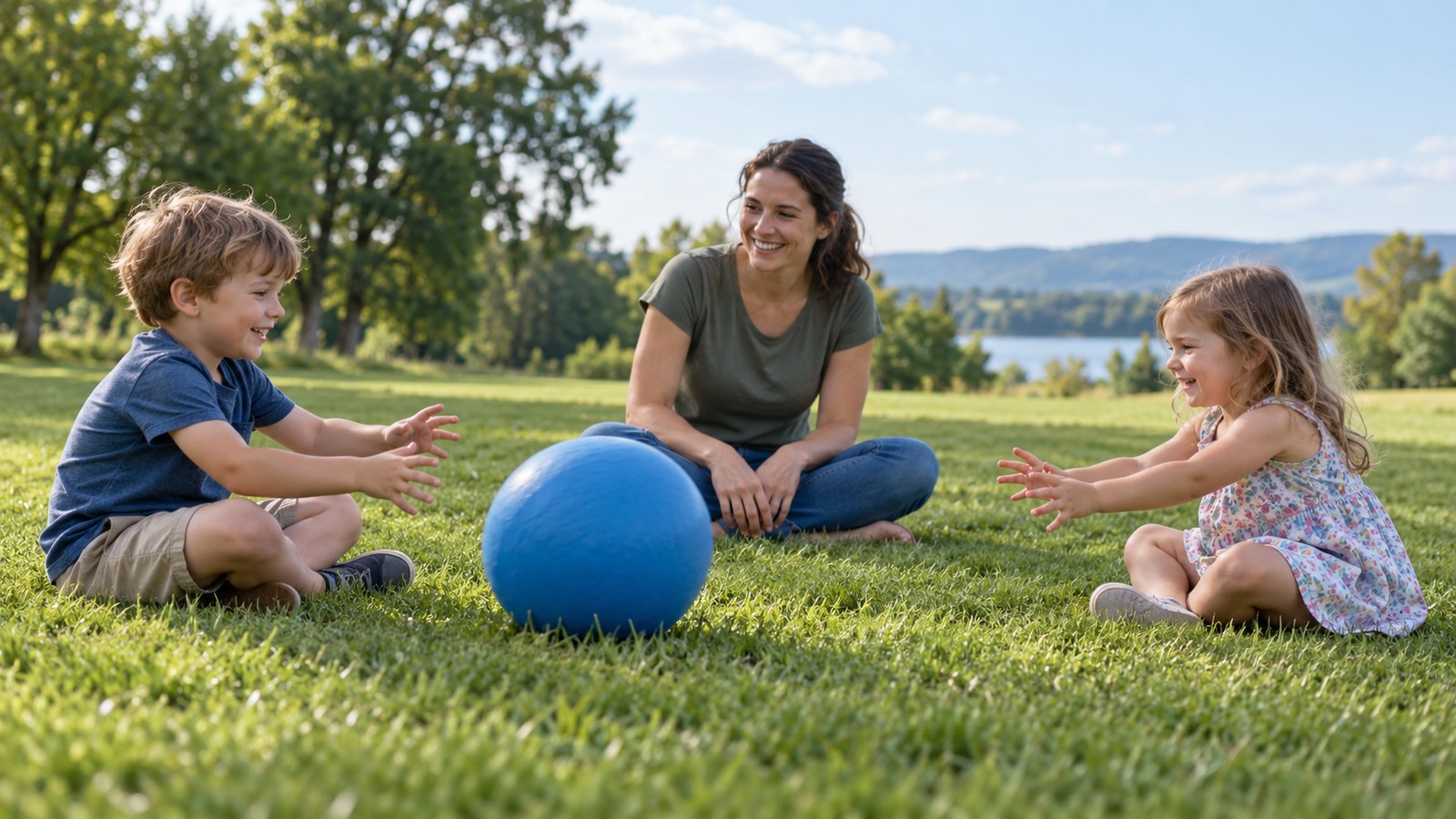
Make a broad target using two stable objects placed away from the child’s route. Sit facing each other and roll a soft ball through the opening. Let the child choose when to send it back. Bring the gate closer or widen it if accuracy becomes frustrating. Children can use a comfortable supported position, and an adult can retrieve the ball so the game remains about directing a roll rather than chasing it.
2. Follow a Gentle Curving Path
Use an existing clear path or a safe removable floor marker to suggest a wide curve. Invite the child to travel along it at a comfortable pace. Model looking ahead and leaving space.
A walking child can choose slow steps, while a child using mobility equipment can follow an accessible route. Remove narrow turns and obstacles that make participation unnecessarily difficult. The route should remain a game, not a balance test above the ground.
3. Deliver Soft Toys to Their Homes
Place a few age-appropriate soft toys at one end of a clear space and an open basket nearby. Invite the child to carry one toy at a time to its home. Keep the load light and the route short. Change the story by giving each toy a different destination. A child can also deliver from a seated position to a reachable container, with the adult bringing toys within comfortable reach.
4. Play Copycat With Broad Movements
Take turns leading simple movements such as reaching out, turning the torso comfortably, or making a wide arm circle. Demonstrate one action at a time. Give the child room to invent the next movement.
Copy the child’s contribution rather than correcting it into an exact adult version. Keep movements within comfortable ability and avoid sudden twisting or forced stretches. A seated leader has just as much authority in the game as someone standing.
5. Walk Between Islands on the Ground
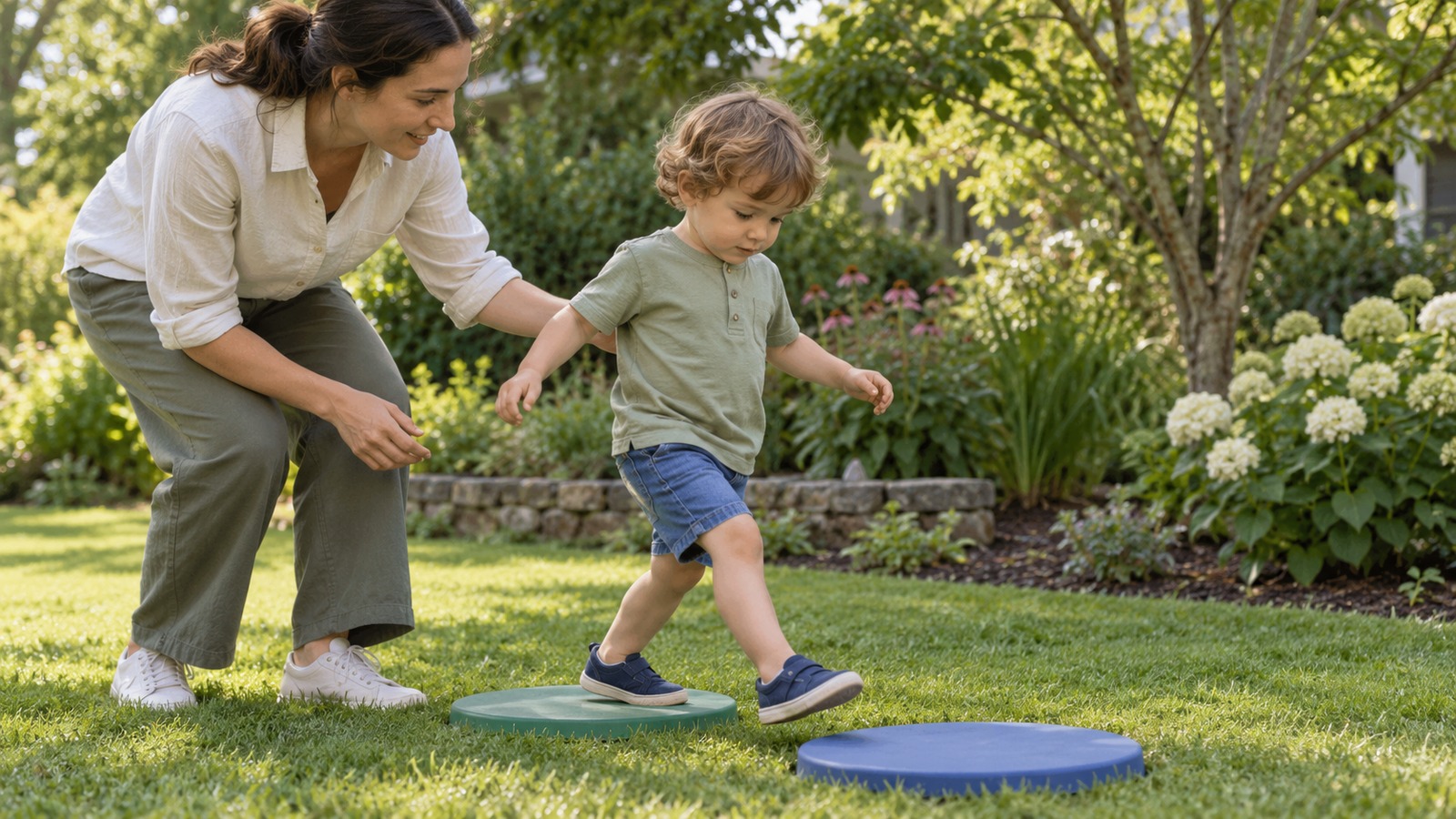
Arrange flat nonslip markers on a level surface with manageable gaps. Invite the child to move from one island to another without rushing. The markers should not slide or raise the child above the ground. Reduce gaps or make the islands wider when needed. Children can choose the route, and an accessible wheeled version can use broad zones that allow easy turning without blocking the way.
6. Push a Soft Ball Toward a Wall
Choose a safe wall with open space in front and no fragile objects nearby. Have the child push or roll a soft ball toward it. Watch together to see where the ball returns.
Stand or sit closer before increasing distance. An adult can intercept an unpredictable rebound and reset the ball. This variation gives a clear destination without requiring another child to catch or follow a complex sequence.
7. Dance Like the Weather
Invite a gentle breeze, slow drifting clouds, and a brief lively rain shower through movement. Describe one image and let the child interpret it. Arms, shoulders, steps, or a supported seated sway can all be part of the dance. Keep the floor clear and the music at a comfortable volume. Finish with a quieter weather scene so the game has a visible change of pace rather than an abrupt command to stop.
8. Send a Large Ball Down a Lane
Create a broad lane with safe floor markings rather than hard barriers. Invite children to roll a large soft ball toward a distant patch. Give each player a separate turn and a clear place to wait.
Move the destination closer for a beginner. A ramp designed or approved for the child’s needs may support participation when hand release is difficult. The game can focus on choosing direction without requiring a particular throwing technique.
9. Take a Slow Discovery Walk
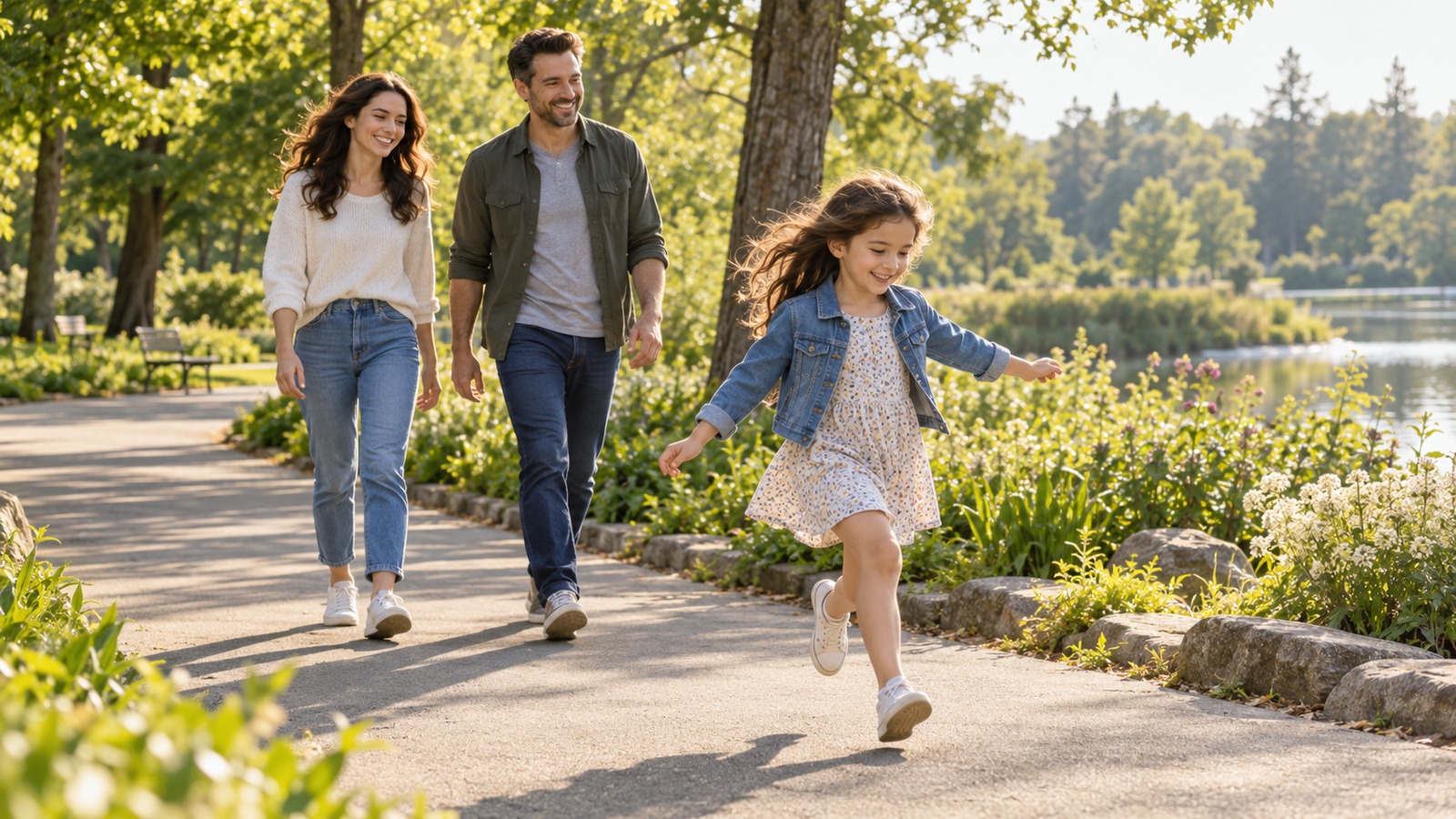
Choose a safe accessible route and look for ordinary natural details such as a leaf shape or a moving shadow. Pause to notice rather than collecting small objects. Let the child set a manageable pace with adult supervision. The purpose is to connect movement with curiosity, not to cover a required distance. A short familiar loop can offer more participation than an ambitious route that ends in exhaustion or distress.
10. Step Over a Very Low Boundary
Use a flat line first and invite the child to step from one side to the other. Show the movement slowly. Keep an adult close if support is needed.
For a child ready for a small raised boundary, use suitable soft equipment that cannot roll unexpectedly. Do not build a high obstacle from household furniture. An alternate route around the boundary can preserve participation for a child who cannot safely step over it.
11. Kick Toward a Broad Open Target
Place a large soft ball on a level surface and give it a broad destination. Invite one gentle kick, then retrieve and reset it. Start with a stationary ball rather than adding the difficulty of a moving pass. Keep other children out of the kicking space. If standing balance is difficult, ask the child’s therapist about an appropriate supported version or choose a different game with a meaningful shared goal.
12. Guide a Pretend Train
Let the leader travel slowly around a clear accessible route while others follow with generous gaps. Use a simple stopping signal. Practice the signal before increasing the length of the route.
No one needs to hold clothing or shoulders, which can pull another child off balance. Rotate the leader and allow different ways of moving. Choose a route without sudden turns or narrow places where the group might crowd together.
13. Reach for a Soft Floating Scarf
An adult can gently release a suitable lightweight play scarf within comfortable reach while the child tries to touch or catch it. Keep fabric away from the face and neck and supervise directly. Avoid strings, tied fabric, and small detachable decorations. The scarf’s slow movement gives time to watch and respond. A seated child can choose the side of the next release, and the adult can adjust the height rather than demanding an uncomfortable reach.
14. Move Through an Animal Story
Tell a short story about animals crossing an open meadow. Invite comfortable movements inspired by the characters rather than prescribing difficult positions. A bird might use broad arm movements and a turtle a slower pace.
Let children invent accessible versions instead of requiring crawling, hopping, or bearing weight through painful joints. The story can continue from a chair or other supported position. Change the character when an action stops being enjoyable.
15. Toss Soft Objects Into a Nearby Basket
Use large age-appropriate soft objects and a broad stable basket. Invite an easy underhand toss from a close distance. The child can move nearer or use a roll if tossing is not comfortable. Keep the basket below face level and away from breakables. Let the child retrieve only when everyone has stopped throwing, and avoid turning each miss into a correction or a reason to move farther away.
16. Make a Cooperative Ball Journey
Two people can work together to move a soft ball from one broad floor zone to another. They may roll it back and forth along the route. Agree that speed does not determine success.
Choose a role each person can manage and pause when the ball leaves the path. An adult can return it without ending the game. Cooperative play works best when both participants influence the journey rather than one doing all the difficult work.
17. Freeze in a Comfortable Shape
Move gently to music and pause when the sound stops. Each child chooses a stable comfortable shape, including sitting or standing with support. Keep pauses brief and avoid demands to balance on one leg. Resume before the game becomes uncomfortable. A visible hand signal can accompany the music for children who benefit from another cue, and the child can take a turn controlling the pauses.
18. Carry an Empty Basket Together
Invite a child and adult to carry a light empty basket across a short clear space. Agree on the destination before starting. Keep the adult ready to take the load.
Keep the basket empty and light. A child can direct the destination or add a large soft toy after arrival. Shared timing, rather than lifting a load, is the challenge.
19. Follow a Shadow’s Shape
On a safe level outdoor surface, notice how an adult’s shadow changes with a broad arm movement. Invite the child to make a different shape beside it. Avoid staring at the sun or chasing shadows toward traffic. Children can take turns choosing a pose that feels steady. A seated version can focus on the outline of arms and upper body without treating standing as the necessary way to play.
20. Pass Around a Small Circle
Sit with a few people and pass a large soft ball from one person to the next. Keep everyone within an easy reach. Start with a predictable direction and an unhurried pace.
Say the recipient’s name before passing when that helps attention. Rolling to the next person is another option. The adult can adjust spacing so a child does not need to lunge or twist beyond comfort to remain included.
21. Sweep Imaginary Leaves
Invite broad gentle arm movements as though moving leaves into a pile. No actual tool is required. Children can reach within a comfortable range and choose where the imaginary pile belongs. Add a short story about a helpful garden crew rather than a demand for repetitions. A seated version can work in front of the body, and children can change the pace or pretend leaf color to direct the play.
22. Travel to Matching Color Zones
Place large safe colored mats on a clear surface with accessible routes between them. Invite the child to choose a color and travel there. Keep the number of destinations small at first.
Use color names only when the child understands them; pointing works too. Do not scatter small objects across the path. The child can become the director while the adult travels, then switch roles when ready.
23. Try a Gentle Mirror Walk
Walk side by side at an easy pace and invite the child to match a few slow steps. Stop together using an agreed cue. Avoid walking backward into an unseen space or introducing surprise changes of direction. Children can also mirror a wheelchair user’s pace along a broad accessible route. The challenge comes from noticing a partner, so a shorter calmer version may work better than a long march.
24. Build a Floor-Level Delivery Route
Arrange two or three broad destinations around a clear room. Give each stop a pretend purpose, such as returning a toy or greeting an animal. Let the child choose the order.
Keep everything at an appropriate height and avoid tunnels made from unstable furniture. A route can be shortened after one delivery. If the child uses mobility equipment, preserve generous turning space rather than adding obstacles for difficulty.
25. Let the Child Redesign a Favorite Game
Ask the child to redesign one successful game by changing a destination, target or partner. Try the change if it remains safe, and notice whether it makes play more enjoyable or accessible. Keep useful adaptations and stop for pain or concerning symptoms. These are play invitations; they do not promise strength gains or replace individualized therapy.