Match the Movement Goal to the Stage of Childhood
A baby’s floor play, a toddler’s busy morning, and a teenager’s energetic walk can all belong to an active day, but the guidance is different at each stage. Parents need to know both the age-based target and what it means in ordinary life. Activity is not limited to a sports practice, and a minute target should not become a demand to push through pain, unsafe conditions, or a child’s individual medical needs. This guide separates infant and early-childhood recommendations from the school-age and adolescent target, then shows how to plan opportunities that fit the child and household. Begin with enjoyable, safe movement and consider what makes participation possible. If your child has a disability, medical condition, pain, or a concern about development, ask the appropriate professional how general guidance should be adapted. The useful aim is a sustainable pattern of movement, not a competition among families.
A: No. The time can accumulate through varied movement and play across the day.
A: No. It is supervised awake play; babies should be placed on their backs for sleep.
A: Frequent active opportunities throughout the day are the practical focus.
A: It can, when safe and at an effort relevant to the activity target.
A: No. Suitable play can overlap categories.
A: No. Age, abilities, medical needs, access, and suitable supervision matter.
A: Explore other enjoyable settings rather than equating that preference with dislike of movement.
A: Yes. Activity belongs within a balanced day, not in place of sleep or recovery.
A: Stop and obtain appropriate medical advice rather than pushing through.
A: Choose one safe accessible opportunity the child is willing to try and build thoughtfully.
| Age | Activity reference | Framework |
|---|---|---|
| Under 1 year | Varied movement several times daily; for babies not yet mobile, at least 30 minutes of supervised awake tummy time spread through the day | WHO under-five guidelines, 2019 |
| 1–2 years | At least 180 minutes of varied activity at any intensity, spread through the day | WHO, 2019 |
| 3–4 years | At least 180 minutes, including at least 60 minutes at moderate-to-vigorous intensity | WHO, 2019 |
| 3–5 years | Active throughout the day | U.S. Physical Activity Guidelines, second edition, 2018 |
| 6–17 years | At least 60 minutes daily of moderate-to-vigorous activity; include vigorous, muscle-strengthening and bone-strengthening activity on at least three days weekly | U.S. guidelines, 2018 |
Infancy: Make Room for Supervised Active Play
Infants need opportunities to move in age-appropriate ways rather than spending every waking period contained in equipment. A safe floor space can allow reaching, turning, and other movement suited to current abilities. An adult can join the play and respond to the baby’s cues without forcing a position or trying to accelerate a milestone. For a school-age child, an illustrative hour could accumulate through twenty minutes of brisk active travel, twenty minutes of energetic playground play and twenty minutes of a game after school. Count movement actually done, rather than the entire lesson or outing. Adapt the plan to health and access needs; the example illustrates accumulation and does not prescribe equal blocks for every family.
The World Health Organization’s guidance for children under five recommends varied activity several times daily for infants. For babies who are not yet mobile, it includes at least thirty minutes of tummy time spread across the day while awake. Tummy time is supervised awake play; babies should still be placed on their backs for sleep. Discuss positioning, tolerance, and any medical concerns with the baby’s clinician rather than pursuing a target through distress or unsafe practice.
One and Two Years: Think of Activity Across the Whole Day
For children aged one and two, WHO recommends at least 180 minutes of varied physical activity at any intensity, spread throughout the day. That does not mean a three-hour workout. It can include the many small episodes of moving, exploring, carrying, dancing, walking, and playing that fit a toddler’s abilities. Adults provide safe space, supervision, and invitations to participate. They also notice when a child needs rest or a task is too difficult. A toddler’s movement can alternate naturally with meals, sleep, stories, and quieter play. If the day contains long periods in a seat or other restraint, consider where safe opportunities to move can be added. Medical and developmental needs may require individualized guidance, and a target is not a reason to force standing, walking, or another skill the child cannot yet manage.
Three to Five Years: Encourage Frequent Active Play
The CDC’s child activity overview advises children aged three through five to be active throughout the day. For families using U.S. guidance, the practical message is to provide frequent opportunities rather than expect one organized session to carry the entire day.
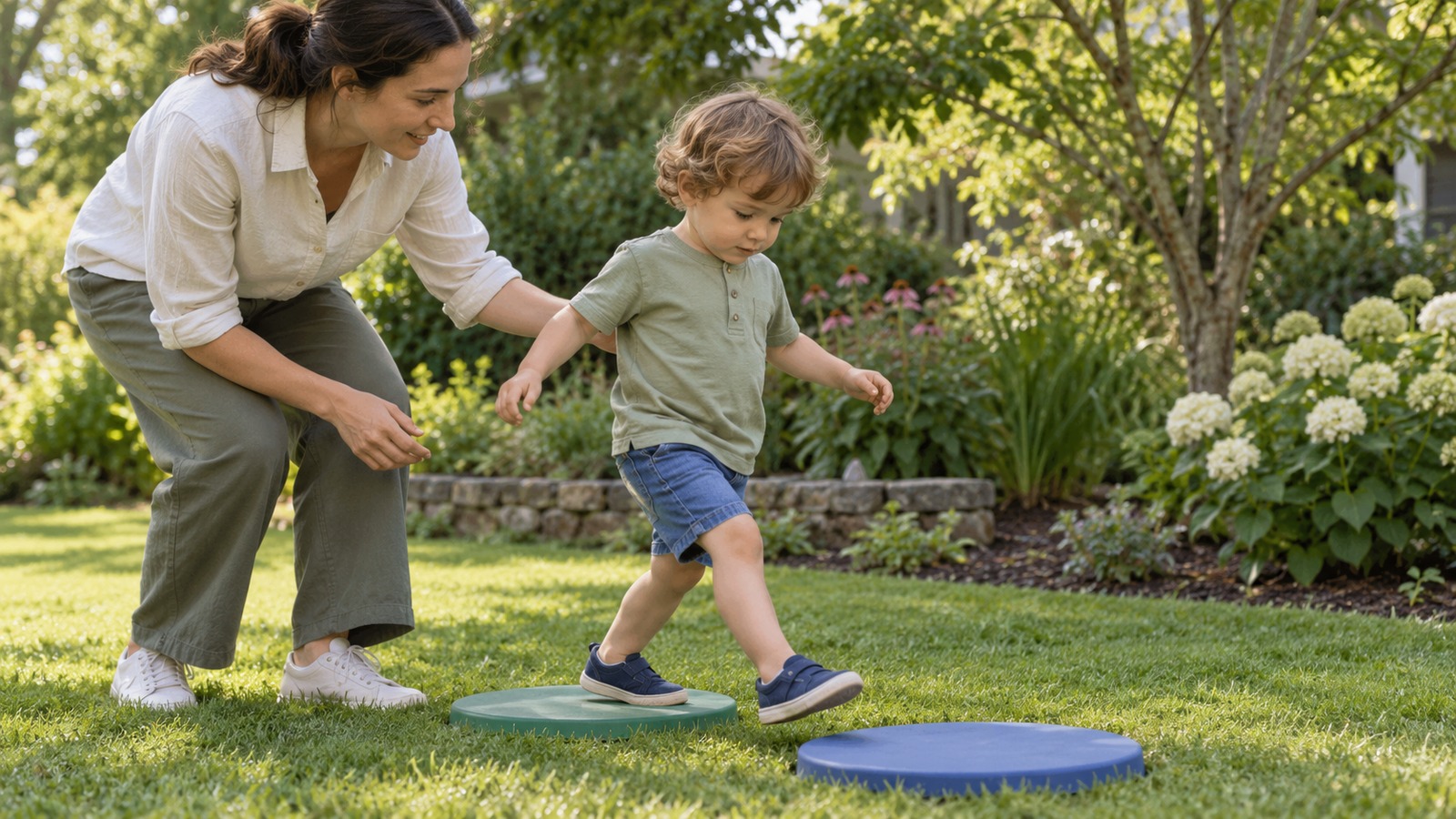
Offer different kinds of movement in appropriate spaces. A short walk, playground play, dancing, and suitable games may contribute in different ways. Choose equipment and challenges that fit the child’s abilities and use appropriate supervision.
WHO provides a more specific under-five framework, including a total activity target and more energetic activity for ages three and four. These frameworks describe related goals in different ways. Avoid treating every family schedule as a stopwatch exercise; ask whether the child has regular, varied opportunities to move and whether barriers need attention.
Six to Seventeen Years: Protect an Hour of Daily Activity
For children and adolescents aged six through seventeen, CDC recommends at least sixty minutes of moderate-to-vigorous activity each day. Most of that time should be aerobic activity, with vigorous activity included on at least three days weekly. Muscle-strengthening and bone-strengthening activities should also occur on at least three days a week as part of the overall activity.
Those categories can overlap. An enjoyable game may involve sustained movement, faster bursts, and jumping in the same session. The recommendation does not require a different paid class for each category. The CDC examples of what counts help explain the mix. Match activities to age, skill, safety, and individual needs, and ask for guidance when a medical condition or disability changes how the child can participate.
Recognize Effort Without Turning Play Into a Test
Moderate and vigorous movement involve more effort than very light activity, but children do not need a home laboratory to recognize an energetic game. Notice the nature of the activity, the child’s engagement, and whether breathing and heart rate rise appropriately with effort. A gentle stroll and a fast-moving game may both be worthwhile while contributing differently to the recommended mix. Do not use discomfort, exhaustion, or a distressed child as proof that an activity is effective. Stop and seek appropriate advice for concerning symptoms such as chest pain, fainting, or unusual breathing difficulty. If your child needs individualized exercise guidance, follow that plan rather than a general description of intensity. The aim is useful participation that can be repeated safely.
Count Movement Beyond Organized Sport
Sports can be a valuable option, but they are not the only route to an active day. Safe active travel, energetic play, dancing, recreation, and some household tasks may add movement. What counts toward a particular target depends on the activity’s effort, not whether it has a uniform or coach.
Ask your child what kinds of movement they enjoy and where they feel competent enough to participate. A child who dislikes a competitive team may enjoy a different setting. Avoid interpreting one disliked activity as rejection of movement altogether. Explore alternatives that fit the budget and local opportunities, while keeping the child’s needs and safety in view.
Build Opportunities Into Transitions the Family Already Has
Look for places where movement can fit without requiring an entirely new family system. A short active period after school, a safe walk connected to an errand, or outdoor play before the evening routine may be easier to sustain than an ambitious plan that only works on a free weekend.
Start with a specific opportunity and the practical requirements it creates. Consider supervision, clothing, equipment, travel, weather, and the time needed to change activities. A plan that ignores these details may seem simple to an adult but remain inaccessible to the child.
Invite participation without making movement a punishment for eating, sitting, or having a difficult emotion. Keep the purpose connected to play, skill, connection, and wellbeing. If the first opportunity is not workable, change the setting or timing rather than concluding that the family lacks discipline.
Include Strength and Bone-Loading Through Suitable Play
For school-age children and teens, the weekly mix includes activities that challenge muscles and bones appropriately. Climbing, age-appropriate bodyweight movement, running, and jumping can contribute, depending on the child’s abilities and the activity. A beginner does not need an adult-style lifting plan to have opportunities for strength. If a child wants structured resistance training, seek qualified supervision and an approach suited to age and development. Avoid maximal effort contests or copying an advanced routine from a video. For children whose movement or weight-bearing is limited, ask the care team about appropriate adaptations rather than treating the usual examples as mandatory. General categories guide planning; they do not replace an individual assessment of safety and access.
Remove Access Barriers Before Blaming Motivation
A child may need an accessible route, adapted equipment, a quieter setting, a supportive adult, or a clearer explanation of the game. Transportation, cost, and the design of a program can also determine whether participation is possible. Ask what the child is encountering rather than assuming a reluctance to try.
Coordinate with school staff, coaches, therapists, or other professionals when appropriate. A useful adaptation preserves a meaningful role and respects the child’s preferences. Avoid making participation depend on matching another child’s performance. Progress can include greater confidence in an activity, more comfortable movement, or a new way to join others, alongside any goals set by the care team.
Coordinate With Other Adults Without Doubling the Pressure
Parents often see only part of a child’s active day. A preschool may provide outdoor play that is not obvious from the pickup conversation, while an older child’s practice may include a substantial amount of waiting. Ask caregivers or school staff what opportunities are actually available and how your child participates. This is an exchange of useful information rather than a request to grade the child’s effort. It may reveal that the most helpful home contribution is a different kind of movement, an accessible alternative, or simply enough time to rest before the next day. Share relevant health guidance with adults who supervise activities so expectations do not conflict.
For separated households or several regular caregivers, agree on a few practical arrangements. Decide where suitable shoes or adapted equipment will be kept, who provides supervision, and how a change in health will be communicated. A missed outing need not become evidence in an argument about which household cares more. The purpose of coordination is to reduce friction around opportunities that the child enjoys. When an older child can participate in the discussion, include their view of the schedule. They may identify an activity they want to keep, a transition that feels rushed, or a barrier adults have overlooked. Revisit the arrangement when it stops helping rather than treating an initial plan as a permanent obligation.
A simple shared description can be enough: what the child likes, what assistance is needed, and which concerns require a call. Detailed daily scoring is rarely necessary for ordinary family planning. Keep the information proportional to the decision it supports, and protect the child’s dignity when adults discuss abilities or limitations.
Let Rest and Recovery Remain Part of the Day
Activity guidance is not an instruction to remove sleep, meals, recovery, or quiet interests. A child needs a balanced day, and an overloaded schedule can make every part harder. Look at whether organized commitments leave room for rest, unstructured play, and relationships. If pain, persistent fatigue, injury, or a medical concern affects movement, obtain appropriate advice. Do not ask a child to conceal symptoms to maintain a streak or keep a team place. Families can value activity while responding seriously to the child’s condition. The goal is a repeatable pattern that supports health and participation, rather than a brief burst of activity followed by exhaustion or avoidable injury.
Review the Week Without Ranking Every Minute
Consider where the main opportunities occur: school, childcare, active travel, recreation, or home play. Ask which days offer little movement and which kinds of activity are missing. You can use that information to choose one manageable change.
Keep the review age-appropriate. A toddler’s varied movement is not recorded in the same way as a teenager’s practice schedule. Estimates may be enough to reveal a barrier or a useful opportunity.
For an older child with a specific activity plan, agree on what is worth tracking and why. A record should help decisions rather than create constant surveillance or comparisons. Revisit the plan when school schedules, seasons, interests, or health needs change.
Choose a Starting Point That Fits This Child
If your child is currently less active, begin with accessible opportunities and increase participation thoughtfully. Choose something they are willing and able to try, make the practical arrangements clear, and notice what helps them return to it. Seek professional guidance when medical or developmental concerns affect the plan.
The age-based recommendations give families direction, while the child’s needs and circumstances determine implementation. Protect room for movement across the day, include variety over the week, and keep play and enjoyment visible. A useful activity plan is one the child can participate in safely and the household can sustain, with support available when a general target does not fit the individual situation.