Child Development Stages Give Parents a Map, Not a Deadline
Child development stages help parents notice how children grow, learn, connect, and become more independent over time. They are useful because they turn a confusing stream of daily changes into a clearer pattern, but they are not meant to make every child look identical. A baby who walks early may talk later, a preschooler who loves numbers may still need help sharing toys, and a teen who seems mature in one setting may still need calm guidance in another. The healthiest way to use development stages is to watch the whole child: body, language, emotions, relationships, curiosity, sleep, stress, and confidence. When parents understand the broad direction of growth, they can offer support that fits the child in front of them instead of comparing every moment to a chart.
A: A single late milestone is often just variation, but a pattern of delays or lost skills deserves a pediatric conversation.
A: New abilities use energy, and children may become more emotional while their brain and body organize the change.
A: Charts describe common ranges, not a perfect schedule for every temperament, culture, body, or learning style.
A: Compare the child with their own earlier self and look for growth across months, not isolated days.
A: Sleep, friendships, emotional recovery, curiosity, movement, confidence, and family connection all matter.
A: Yes. A child can read early, talk fluently, or reason well while still needing support with emotions or independence.
A: Ask when concerns persist, affect daily life, appear across settings, or involve regression.
A: No. Big feelings can appear at any age, though the reasons and support strategies change.
A: Healthy independence grows when children have practice, safety boundaries, and adults nearby for coaching.
A: Stay curious about what the behavior is showing, then teach the missing skill with calm consistency.
Infancy: Trust, Senses, and First Communication
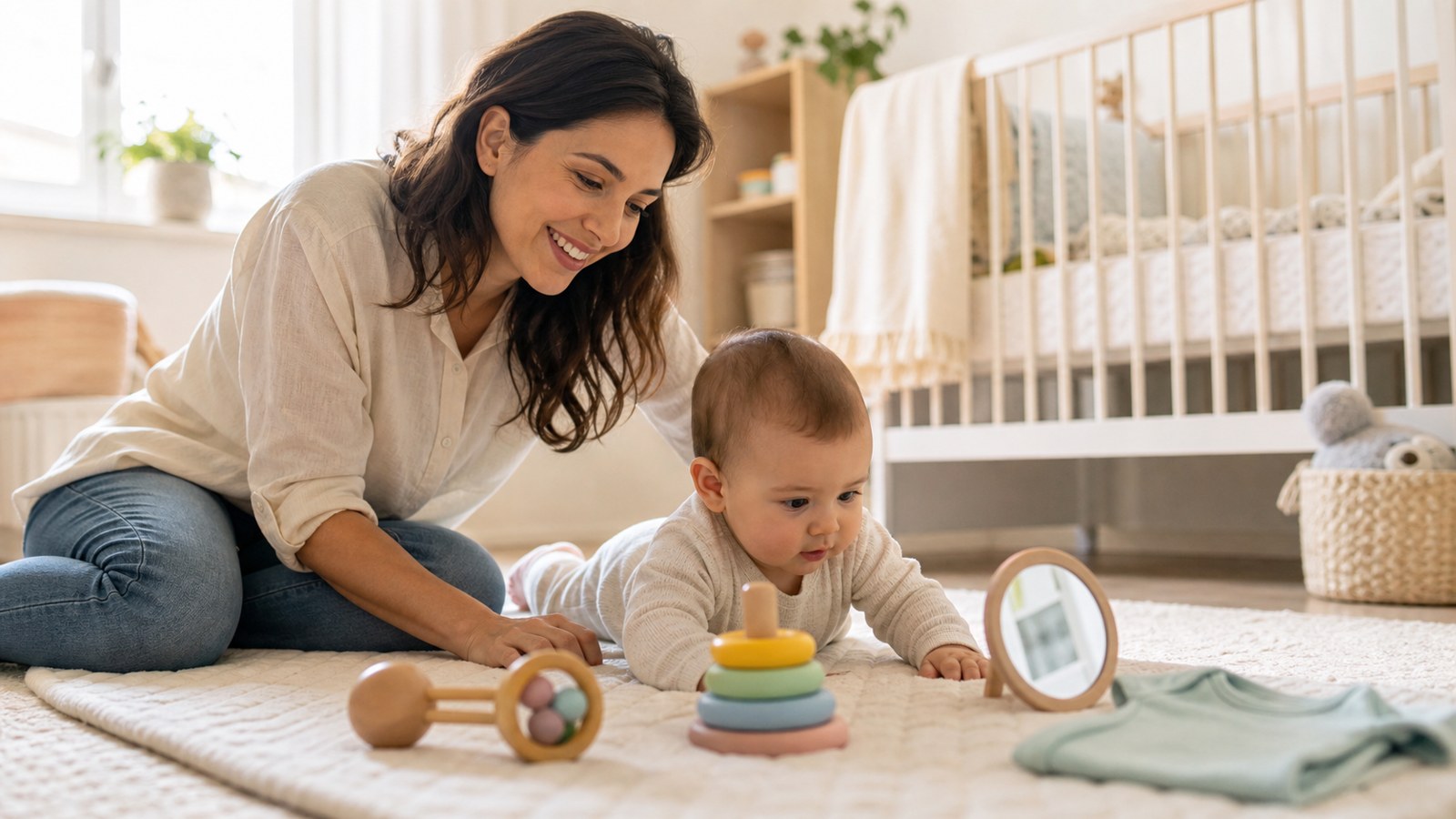
In the first year, development is rooted in safety. Babies learn through the repeated experience of being fed, held, changed, soothed, spoken to, and noticed. Their brains are not only collecting information about sounds, faces, smells, and movement; they are also learning whether the world responds when they need help. A responsive caregiver does not spoil a baby by meeting needs. That response becomes the foundation for later confidence.
Parents often watch rolling, sitting, crawling, babbling, and early gestures because those milestones are visible. Just as important are quieter changes: a baby turning toward a familiar voice, calming more easily with a trusted person, studying a face, reaching with more intention, or showing delight during back-and-forth play. These small moments are the early language of relationship.
Infant development can feel fast one week and still the next. Growth spurts, teething, illness, travel, and changes in sleep can make progress look uneven. If a baby is generally engaged, responsive, and gaining skills over time, some variation is expected. If parents notice loss of skills, feeding difficulty, limited response to sound or faces, or strong concerns about movement, it is worth asking a pediatrician early.
Toddler Years: Independence With a Very Small Brake Pedal
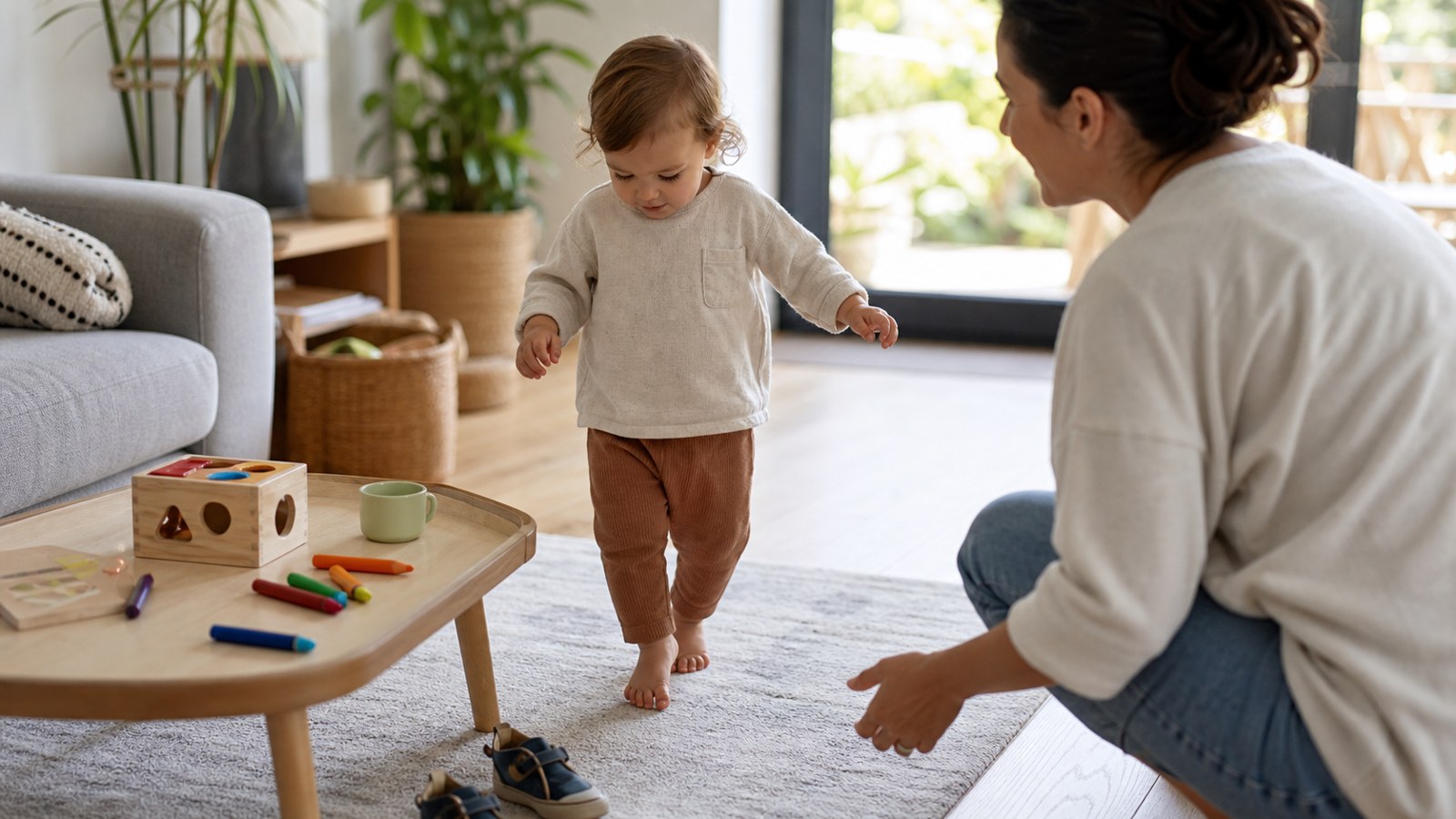
Toddlers are famous for saying no because they are discovering that they have a self. They want to pour, climb, carry, choose, open, close, run, and help, often before they can judge danger or manage disappointment. This stage asks parents to hold two truths at once: the child needs freedom to practice, and the adult still owns safety.
Language changes behavior during this period. A toddler who can name a toy may still be unable to explain why leaving the park feels devastating. Many meltdowns happen because desire, fatigue, and limited communication collide. Short phrases, physical guidance, predictable routines, and fewer choices usually work better than long lectures.
The goal is not to eliminate every tantrum. The goal is to help the child recover, learn the shape of limits, and gradually build self-control through repeated co-regulation. A calm adult body, a clear boundary, and a simple next action teach more than a debate.
Preschool and Early School Years: Imagination, Rules, and Social Practice
Preschoolers often live in a lively mix of fantasy and reality. They may invent stories, assign feelings to objects, ask enormous questions, and test rules just to see whether rules still exist. This does not mean they are manipulative in an adult sense. Their thinking is expanding, and they are practicing how cause, consequence, fairness, and belonging work.
As children move into early school years, peer relationships become more important. A child may come home upset about who sat where, who shared, who won, or who changed the rules of a game. These conflicts can look small to adults, but they are serious social laboratories for children. Parents can help by naming feelings, wondering about other people’s perspectives, and practicing repair language.
This is also when children begin to compare skills. Reading, sports, art, math, humor, and popularity can all become measures of identity. Encouragement is most useful when it names effort and strategy instead of making the child feel valuable only when they are impressive.
Middle Childhood: Competence, Responsibility, and Inner Confidence
Middle childhood often brings a calmer surface, but important growth is happening underneath. Children can follow multi-step routines, understand more complex explanations, and take pride in being useful. They may want real jobs, real tools, and real trust. Parents can support this by giving responsibilities that matter without expecting adult-level consistency.
At this age, children also become more aware of fairness and hypocrisy. They notice whether adults apologize, whether rules apply consistently, and whether family values show up in ordinary behavior. A parent does not need to be perfect. In fact, repair after mistakes may teach more than flawless performance.
School challenges can become clearer during this stage. A child who seemed fine earlier may struggle when reading demands increase, homework requires planning, or friendships become more layered. Instead of treating struggle as laziness, parents can look for the missing skill: organization, decoding, emotional stamina, attention, confidence, or help-seeking.
Teen Years: Identity, Autonomy, and the Long Road to Judgment
Teenagers are not simply bigger children, and they are not finished adults. They are building identity, values, future thinking, social belonging, and independence while the brain systems involved in planning and risk evaluation are still maturing. This gap explains why a teen can be thoughtful on Tuesday and impulsive on Friday. It is not an excuse for harmful behavior, but it is a reason guidance still matters.
Parents often have to shift from manager to coach. That means fewer constant commands and more conversations about choices, consequences, trust, and repair. Teens need privacy and voice, but they also need adults who stay emotionally available. A parent who remains steady through eye rolls, mistakes, and changing opinions becomes a secure base for growing independence.
How to Use Stages Without Turning Them Into Pressure
Development stages are most helpful when they create compassion. A child who is struggling may not be trying to make life hard; they may be showing the edge of their current ability. When parents ask what skill is still developing, discipline becomes more precise. A preschooler may need practice waiting, a school-age child may need help organizing, and a teen may need support thinking through consequences before the exciting moment arrives.
The best expectations are both warm and firm. Warmth tells the child they are loved while learning. Firmness tells the child that the family has boundaries, responsibilities, and respect. Children usually grow best when both are present together.
Pressure often sneaks in when parents treat every delay as a future crisis or every strength as a promise that must be maximized. A more useful approach is to ask whether the child is moving forward with enough support. Some seasons call for extra practice, some call for patience, and some call for professional input. None of those responses require panic.
Parents can also reduce pressure by widening the definition of progress. A child who apologizes after a conflict, tries again after frustration, sleeps better after a routine change, or asks for help instead of shutting down is developing. Those gains may not look dramatic on a milestone chart, but they shape the child’s capacity for real life.
When Professional Support Is a Strength
Parents sometimes delay asking for help because they worry it means something is wrong with their child or their parenting. Support is not a verdict. It is information, coaching, and sometimes relief. Speech therapy, occupational therapy, counseling, school evaluation, pediatric guidance, or parent coaching can reduce frustration for the whole family.
A good rule is to ask when a concern is persistent, intense, widening, or interfering with daily life. Parents do not need to diagnose the problem before seeking guidance. They only need to describe what they are seeing and how often it happens.
Support works best when parents bring concrete examples. Instead of saying a child is behind, it helps to describe what happens during meals, play, schoolwork, dressing, transitions, sleep, or peer conflict. Patterns give professionals something useful to work with. They also help parents see whether the issue happens everywhere or mainly in one setting.
It is equally important to include strengths. A child is never only a concern list. Their humor, curiosity, memory, persistence, tenderness, movement, creativity, or loyalty can become part of the support plan. Good guidance uses strengths as entry points rather than treating development as a set of missing pieces.
Watching Patterns in Ordinary Family Life
Parents do not need a formal assessment tool to become better observers. Ordinary family life already offers useful information. Mornings show planning and transition skills. Mealtimes reveal sensory preferences, conversation habits, and independence. Play shows imagination, flexibility, frustration tolerance, and social problem-solving. Bedtime often reveals what a child has been holding together all day.
The point is not to monitor children so intensely that home feels like a test. It is to notice patterns with kindness. If every difficult moment happens after school, the child may be overloaded rather than oppositional. If every conflict appears during transitions, the child may need more warning and a clearer next step. If a child falls apart only with a trusted caregiver, they may be releasing stress where they feel safest.
Writing down a few observations for a week can help parents see the difference between a random rough day and a repeating need. The most useful notes are simple: what happened before, what the child did, what helped, and how long recovery took. Over time, those details can guide routines, conversations, and decisions about whether outside support would be useful.
The Big Picture
From birth to the teen years, children are moving from total dependence toward capable connection. They need protection, practice, correction, delight, rest, and adults who keep learning alongside them. Stages can help parents know what kind of support fits the moment, but the relationship remains the heart of development. A child grows through thousands of ordinary exchanges: being listened to, being guided, being forgiven, being challenged, and being welcomed back after hard moments.
That long view can steady parents during confusing seasons. A hard month does not define a childhood, and a difficult stage does not erase the child’s progress. When parents stay observant, flexible, and connected, they create the conditions children need to keep growing. The map matters, but the relationship is what helps the child travel.
Parents can return to the same simple questions at every age: What is my child learning right now, what support makes the next step possible, and what limit still needs to be held? Those questions keep development practical. They help families respond to the moment without losing sight of the long arc from dependence to capable, connected independence.
No parent reads every signal perfectly. What matters is the willingness to notice, adjust, repair, and keep offering the kind of steady presence that makes growth feel possible. Over time, that steady presence becomes one of the strongest developmental supports a child can have, especially during seasons that feel uncertain or newly complicated for everyone.