Toddler Development Is a Daily Push Toward Independence
Toddlerhood can feel like a contradiction. A child may demand to do everything alone and then melt down because a sock feels wrong, a banana broke, or the door opened the wrong way. This is not random chaos. Toddlers are developing language, movement, memory, social awareness, sensory preferences, and selfhood faster than their emotional control can keep up. They understand more than they can explain, want more than they can safely manage, and feel more than they can regulate alone. When parents understand toddler development stages, the behavior becomes easier to read. The goal is not to remove every tantrum or win every power struggle. The goal is to guide a small child through the first intense years of autonomy with safety, connection, and clear limits.
A: Tantrums are usually a sign of immature regulation, strong desire, fatigue, or language limits.
A: No gives toddlers a feeling of control while they are discovering themselves as separate people.
A: Reasoning works poorly during peak distress; calm safety and fewer words usually help first.
A: Yes. Toddlers often play near other children before they can truly share a shared game.
A: Two acceptable options are usually enough when the adult still needs the boundary to hold.
A: Ask early if words, gestures, response to sound, or social communication feel limited or stalled.
A: Repetition helps them predict, master, remember, and feel powerful in a manageable way.
A: Routines reduce uncertainty, though they cannot remove every big feeling or developmental test.
A: Connection-seeking is often a need; unsafe behavior still needs calm limits and teaching.
A: Practice, safe spaces, patient coaching, and limits that protect without shaming the child.
Ages One to Two: Movement, Attachment, and First Power
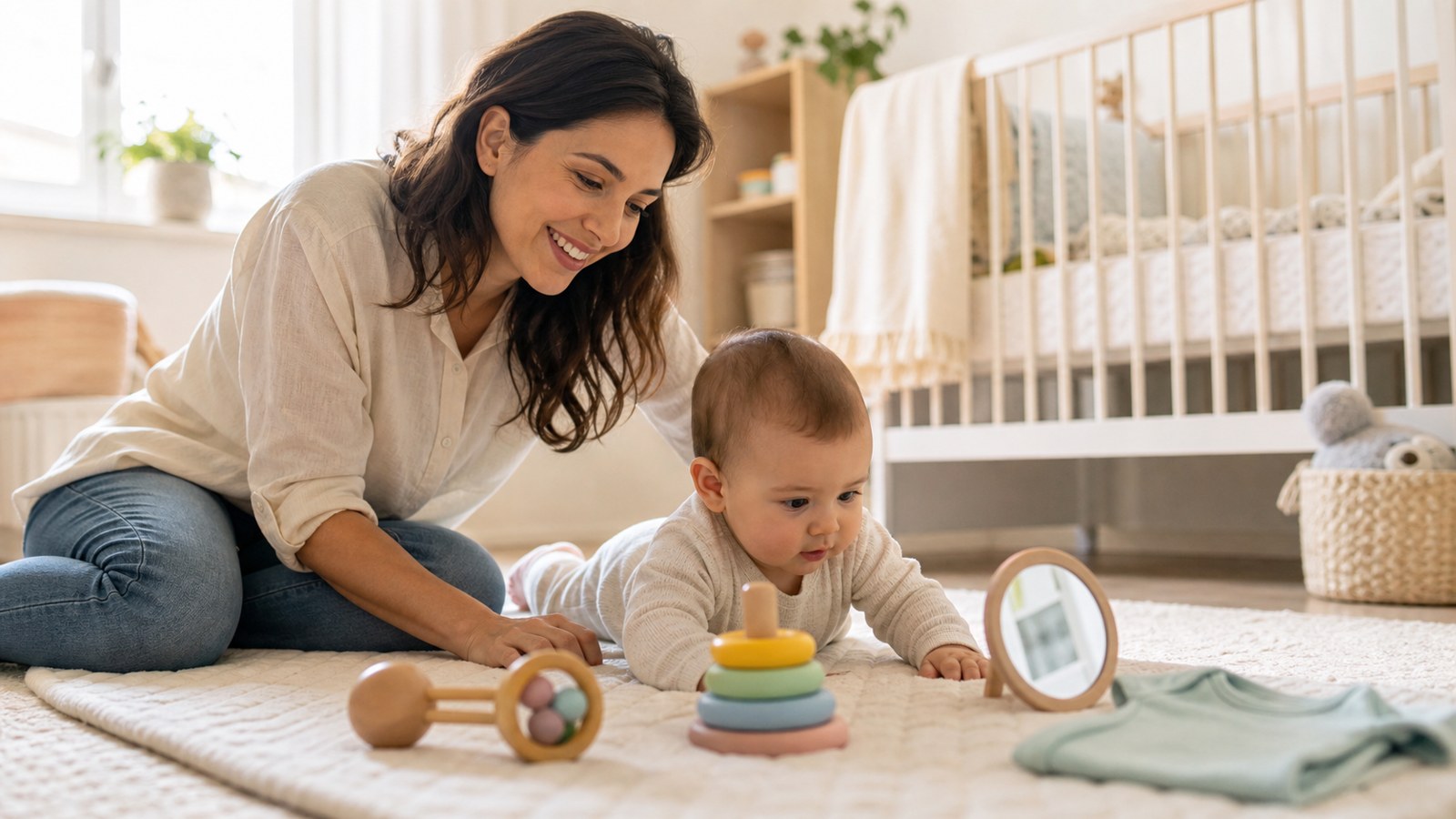
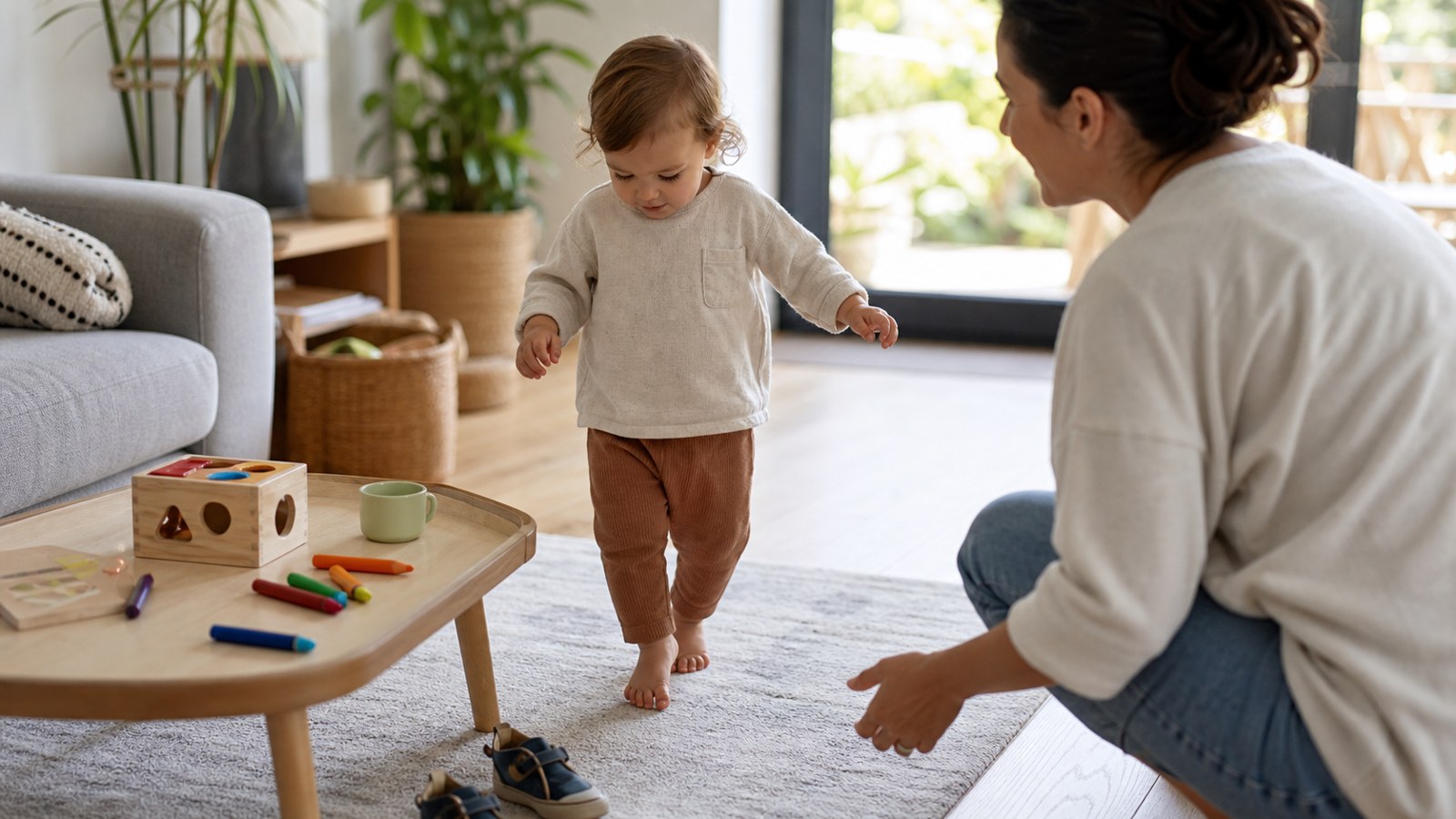
The early toddler period often begins with movement. A child who once stayed where placed can suddenly cross a room, reach new shelves, climb furniture, and resist being carried. This mobility changes the family system. Parents are no longer only caring for a baby; they are creating an environment where exploration can happen without constant danger.
At the same time, attachment remains very strong. Young toddlers may move away and then hurry back, protest separations, or insist on a familiar person during tired moments. This push-pull pattern is healthy. The child is practicing independence from the secure base of a trusted adult. They are not supposed to be emotionally self-sufficient yet.
First words, gestures, and sounds can reduce frustration, but they do not erase it. A toddler may know exactly what they want and still lack the words, patience, or flexibility to manage a delay. Parents can help by naming the desire, holding the limit, and offering the next possible action.
Age Two: The Famous No Has a Developmental Job
The second year is often when parents feel the force of toddler will. No becomes a tool for identity. Mine becomes a tool for ownership. Again becomes a tool for mastery. These words can be exhausting, but they show that the child is learning selfhood, memory, preference, and influence.
Two-year-olds are also beginning to understand routines and simple expectations. They may help put laundry in a basket, carry a spoon, choose pajamas, or copy a cleaning motion. Participation works better than constant command because toddlers want to feel capable. A small real job can soften resistance by giving the child a role.
Still, adults must remain the boundary holders. A toddler can choose the red cup or the blue cup, but not whether to ride unbuckled. They can choose which shoe goes on first, but not whether the family leaves for an appointment. Clear limits are not harsh when they are delivered with calm confidence.
Age Three: Bigger Language, Bigger Feelings, Bigger Stories
By age three, many toddlers are speaking in longer phrases, inventing pretend scenes, asking questions, and remembering more of what happened earlier. This can make them seem older than they are. A verbal toddler may sound persuasive while still having very young impulse control. Parents can overestimate maturity when words arrive before regulation.
Pretend play becomes a powerful window into development. A child may feed a doll, put a toy animal to bed, act out a doctor visit, or repeat a family phrase with startling accuracy. Through play, toddlers organize experiences and practice roles. Joining gently, without taking over, can support language and emotional understanding.
Three-year-olds may also show stronger fears, preferences, and social opinions. They may worry about the dark, reject a food they liked yesterday, or become deeply offended by a change in routine. Parents can acknowledge the intensity without treating every preference as a command. The child needs both empathy and leadership.
Tantrums Are Communication, Not a Parenting Report Card
Toddler tantrums are loud, public, and humbling, but they are not a simple measure of parenting quality. They usually happen when desire, fatigue, hunger, sensory load, transition, or disappointment exceeds the child’s ability to cope. The toddler’s nervous system is asking for help in the least convenient language possible.
During the peak of a tantrum, fewer words are usually better. A parent might say, I will keep you safe, or You wanted to stay, and it is time to go. Then the adult follows through with calm action. Long explanations can add more stimulation when the child is already overloaded.
After the storm, teaching becomes possible. That is when parents can name the feeling, practice a phrase, or show what to do next time. Repair matters too. If the adult became too sharp or loud, a brief apology teaches accountability without handing control of the boundary to the child.
Language Growth Changes the Whole Household
Language is one of the great toddler shifts because it gives families more access to the child’s inner life. A toddler who can say help, more, done, scared, or my turn has more options than one who can only scream or grab. Parents can support language by narrating daily life, reading simple books, singing, waiting for responses, and taking toddler attempts seriously.
It is important not to turn every interaction into a quiz. Asking What color is this? all day can become performance. Real conversation is richer: You found the heavy truck, It rolled under the chair, That crash surprised you. Language grows inside connection.
If a toddler uses very few words, does not gesture much, rarely responds to sound, or loses communication skills, parents should ask for guidance. Speech and language support can make daily life easier and reduce behavior that is driven by frustration.
Safety and Freedom Need to Work Together
Toddlers learn through their bodies. They climb, squeeze, carry, pour, push, pull, and run because movement teaches space, strength, balance, and cause. A home that only says stop can become a battlefield. A home with safe yes-spaces gives toddlers more room to practice while adults save firm no for the limits that truly matter.
This may mean moving breakable objects, locking hazards, anchoring furniture, using gates, and keeping a few cabinets safe to explore. It can also mean offering heavy work, outdoor play, water pouring, or supervised climbing opportunities. Freedom is not the absence of boundaries. It is exploration inside a prepared environment.
Prepared spaces reduce adult anger because they reduce the number of times parents have to interrupt. A toddler who can safely pull board books from a basket, carry soft blocks, or climb on an approved cushion has less need to seek danger for stimulation. The parent still supervises, but the day contains more yes than no.
Safety teaching also works best when it is concrete. Stop your feet near the street is clearer than Be careful. Hands stay on the cart is clearer than Behave. Toddlers need language that points to the exact body action expected in the moment.
Sensory Load Explains Many Mystery Meltdowns
Some toddler struggles are sensory before they are behavioral. A shirt tag, loud hand dryer, crowded store, bright light, sticky hands, or unexpected touch can overwhelm a child whose nervous system is still learning how to filter the world. Adults may see refusal, while the child is feeling overload.
Parents can look for patterns. Does the toddler fall apart after errands, during dressing, at meals, or in noisy places? Does recovery improve with quiet, pressure, movement, or a snack? These clues help families adjust the environment and teach coping skills. They also help parents respond with less blame.
Sensory support does not mean avoiding every challenge. It means pacing the challenge so the child can participate. A toddler who hates handwashing may need a step stool, warmer water, a predictable song, or a towel ready immediately. A child overwhelmed by stores may need shorter trips, a snack beforehand, or a quiet reset in the car. Small adjustments can prevent many battles.
Transitions Are Their Own Developmental Skill
Many toddler conflicts happen at the border between one activity and the next. Leaving the bath, ending screen time, getting into the car, stopping play for dinner, or saying goodbye can feel enormous because toddlers do not shift attention smoothly yet. They may understand the words time to go and still feel unable to move their body toward the next step.
Warnings, rituals, and physical cues can help. A parent might say one more slide, then shoes, hold up the shoes, and move closer before the final transition. The adult is not asking the toddler to manage time alone. The adult is lending structure until the child can borrow it less often.
How Parents Can Stay Steady
Toddlerhood asks a lot from adults. It requires repetition without immediate proof that the lesson is working. A parent may hold the same hand-crossing-street boundary hundreds of times before the child reliably accepts it. That repetition can feel pointless, but it is how young children borrow adult structure until their own self-control grows.
Parents stay steadier when they lower the expectation of instant cooperation. The toddler is not a tiny adult with poor manners. The toddler is a developing person with a fast body, strong feelings, emerging language, and limited brakes. This perspective does not remove limits. It helps parents hold them with less resentment.
Steadiness also depends on adult needs. A hungry, rushed, unsupported parent will have less patience for toddler repetition. Building small supports into the day matters: preparing snacks before errands, leaving extra transition time, trading off with another adult when possible, and choosing which battles truly require intervention. Parent regulation is not a luxury. It is part of the toddler’s learning environment.
When parents do lose patience, repair is powerful. A simple statement such as I yelled, and I am sorry, followed by a return to the boundary, teaches that adults can be accountable without becoming permissive. Toddlers learn from the repair as much as from the rule.
The Purpose of Toddler Guidance
The purpose of toddler guidance is not to win every moment. It is to teach safety, trust, communication, and recovery over time. A toddler who hears no calmly, receives help through big feelings, practices small responsibilities, and experiences repair after conflict is learning the building blocks of self-control.
These years are intense because so much growth is compressed into ordinary days. The spilled water, repeated question, bedtime protest, and grocery store meltdown are not interruptions to development. They are development. With patience, structure, and support, toddlers gradually become more capable of doing what parents have been helping them practice all along.
That progress is often visible only in hindsight. The toddler who once screamed through every goodbye may begin waving with tears but less panic. The child who grabbed every toy may pause for one second before needing help. The bedtime protest may shorten. These small changes count. They show that repetition is becoming internal structure.
Parents can trust the slow work. A toddler does not need perfect responses from adults, but they do need adults who keep returning to connection and clarity. Over time, that combination helps independence become safer, language become more useful, and big feelings become less frightening for everyone.