Family Roles Shape the Feeling of Home
Every household has roles, even when no one names them out loud. Someone remembers appointments, someone calms conflict, someone notices the empty milk, someone makes people laugh, someone carries worry, and someone quietly keeps the day moving. Family roles can be practical, emotional, cultural, or temporary. They can help a home feel organized and secure, but they can also become heavy when one person is always expected to absorb the same kind of pressure. Understanding family roles is not about assigning rigid titles to parents, children, partners, or relatives. It is about noticing how each household member influences the rhythm of family life, then asking whether those patterns are fair, flexible, and healthy for the people living inside them.
A: No. Roles become unhealthy when they are rigid, unfair, invisible, or too heavy for one person.
A: Yes, if the role is age-appropriate and does not make the child responsible for adult needs.
A: Families repeat familiar patterns because they once solved a problem or created predictability.
A: Look for planning, remembering, noticing, preparing, soothing, and follow-up tasks that happen before others act.
A: Equal is not always fair; capacity, time, age, and stress should shape the division.
A: It happens when a child carries adult emotional or caregiving responsibilities beyond healthy limits.
A: Yes, but change usually needs naming, practice, and patience from the whole household.
A: Birth order, temperament, needs, family stress, and adult expectations can all influence sibling patterns.
A: Trust often grows through predictable care before roles and authority feel settled.
A: Notice one repeated responsibility and ask whether the person carrying it has enough support.
Practical Roles Keep a Household Moving
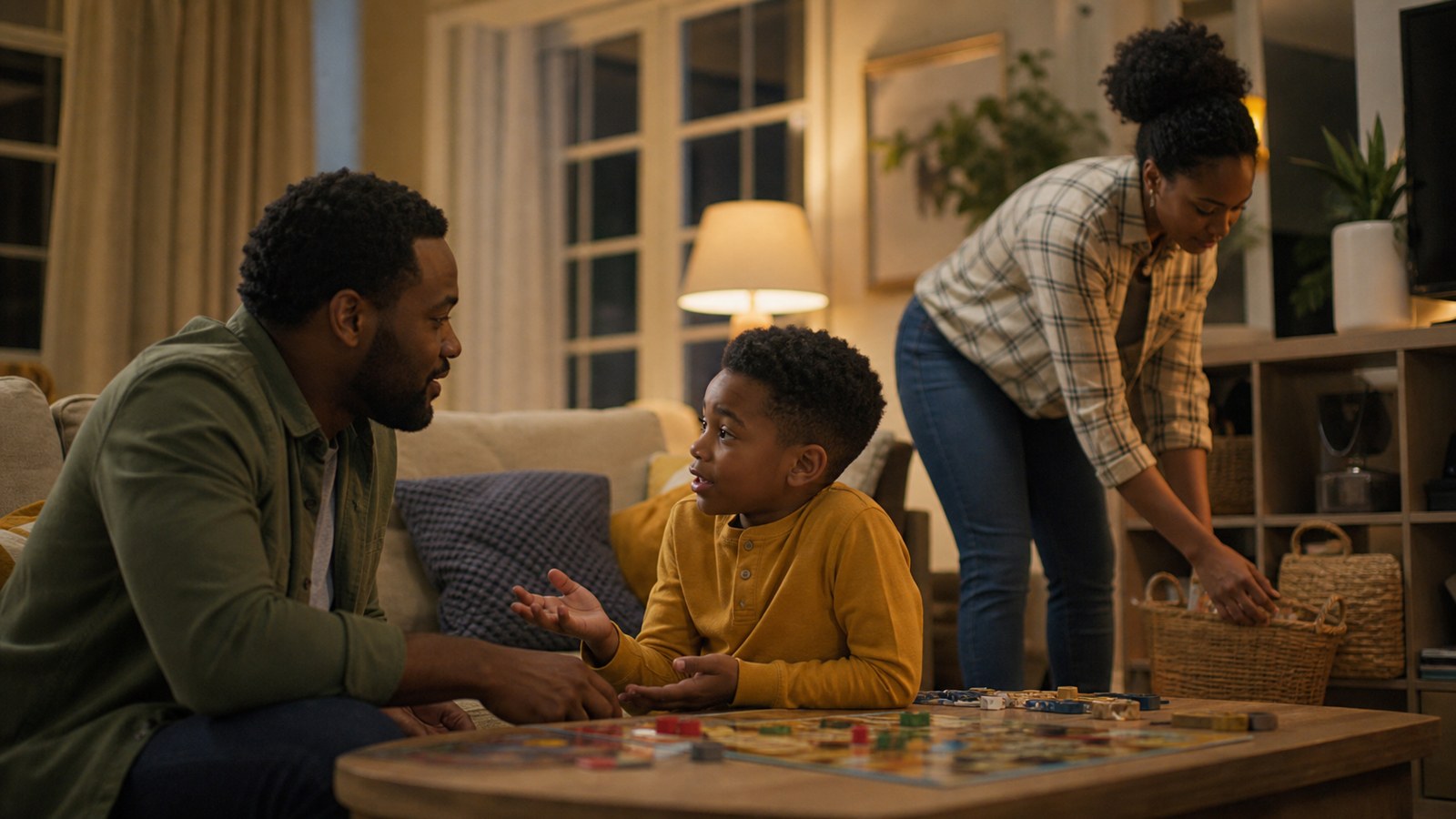
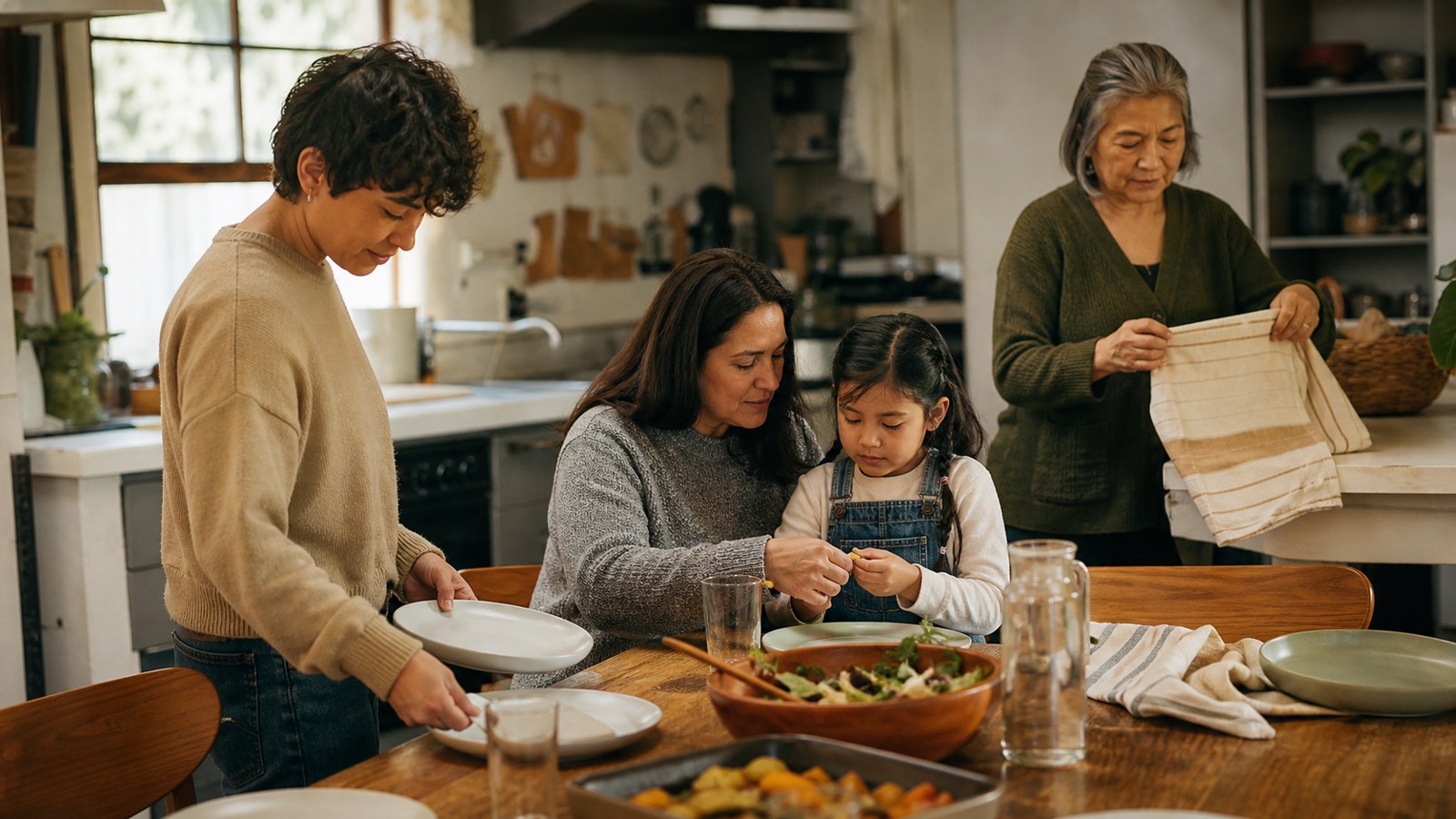
Some family roles are easy to see because they involve visible tasks. A parent cooks dinner, a teenager takes out trash, a grandparent drives to practice, or a child feeds the dog. These roles matter because daily life depends on repeated actions that are rarely dramatic. Homes run on groceries, laundry, calendars, dishes, bedtime routines, school forms, transportation, and reminders.
The challenge is that practical roles are not always distributed by conversation. They often settle around whoever notices first, cares most, has the most flexible time, or has historically done the task. Over time, that person may become the default. Everyone else may assume the job is handled without seeing the mental work behind it.
Healthy families revisit practical roles as circumstances change. A new job, new baby, illness, school transition, move, or aging relative can make an old arrangement unfair. The question is not who has always done it. The question is what the family needs now and who has the capacity to help.
Emotional Roles Are Often Less Visible
Emotional roles can shape a home even more strongly than chores. One person may be the listener, the calmer, the conflict smoother, the mood lifter, or the one who senses tension first. These roles can be gifts. A family member with emotional sensitivity may help the household stay connected and compassionate.
But emotional roles can become burdens when they are expected rather than chosen. The peacemaker may learn to swallow anger. The cheerful one may feel unable to be sad. The responsible child may hide fear because adults praise maturity. The calm parent may receive everyone’s stress but have no place to put their own.
Families become healthier when emotional work is shared. That does not mean everyone has the same skills. It means no one person is permanently assigned to absorb discomfort so others can avoid growth.
Parent Roles Set the Household Climate
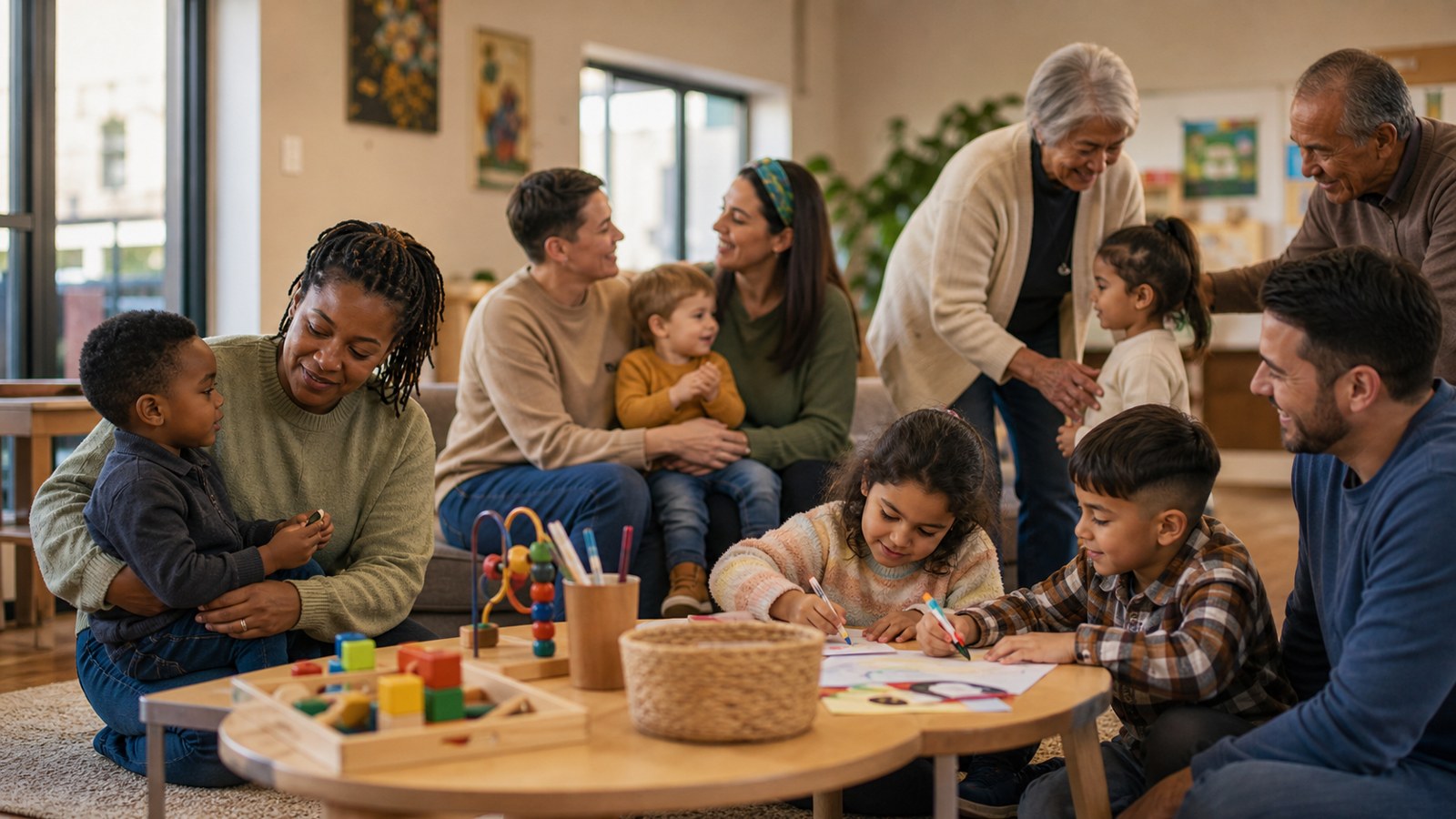
Parents and caregivers shape family life through both action and tone. One adult may be more structured, another more playful, one more protective, another more flexible. Differences can be useful when they are respectful. Children benefit from seeing that adults can bring different strengths while still working from shared values.
Conflict grows when parent roles harden into caricatures. One becomes the strict one, one becomes the fun one, one becomes the worrier, or one becomes the rescue option after every limit. These patterns can divide adults and teach children to shop for the answer they want. A healthier approach is for caregivers to discuss expectations privately and present limits without undercutting each other.
Single parents, co-parents, guardians, and extended family caregivers carry these roles in different ways. The important factor is not a perfect family form. It is whether children experience enough consistency, warmth, and repair from the adults responsible for them.
Children Also Shape Family Roles
Children are not passive recipients of family structure. Their temperaments, needs, humor, sensitivities, strengths, and struggles influence the household. A highly active child may make routines more physical. A cautious child may slow transitions. A socially intense child may bring friends and noise. A child with medical, learning, or emotional needs may require more planning.
Problems arise when a child’s role becomes fixed too early. The easy child may be overlooked. The difficult child may be expected to cause problems even when trying. The smart child may feel valued only for achievement. The sensitive child may be treated as fragile instead of capable. Labels can follow children long after they stop fitting.
Parents can interrupt this by describing behavior instead of identity. Instead of saying you are the messy one, they can say your backpack needs a system. Instead of calling a child dramatic, they can say your feelings got big quickly. This leaves room for growth.
Sibling Roles Can Help or Hurt
Siblings often develop roles in relation to one another. One becomes the leader, one the negotiator, one the rebel, one the caretaker, one the entertainer. These roles can make sibling life lively and connected, but they can also trap children in a family script. The oldest should not always have to know better. The youngest should not always be excused. The middle child should not have to fight for visibility.
Parents can reduce role pressure by giving each child private attention and age-appropriate responsibility. They can also avoid comparing siblings as a motivational tool. Comparison may produce short-term compliance, but it often creates resentment or identity pressure.
When siblings are allowed to change, relationships become more flexible. A child who usually leads can practice following. A quieter sibling can be invited to choose the game. A child who often receives help can become helpful in a realistic way.
Extended Family and Culture Matter
Family roles are shaped by culture, faith, economics, migration, work schedules, gender expectations, and extended family traditions. In some households, grandparents are central decision-makers. In others, older siblings are expected to contribute early. Some families value collective responsibility, while others emphasize individual independence. None of these patterns is automatically good or bad outside of context.
The key question is whether the role supports dignity and wellbeing. A tradition can offer belonging, continuity, and meaning. It can also become harmful if it silences one person, overloads a child, or prevents necessary change. Families can honor where they come from while still adapting roles for the people they are raising now.
Invisible Management Deserves a Name
Many households underestimate the person who manages the thinking before the task. Buying a birthday gift is visible; remembering the birthday, knowing the child’s current interest, checking the budget, planning the shipping time, and reminding someone to sign the card is less visible. The same pattern appears with school forms, medication refills, childcare plans, holiday travel, and family communication.
Naming invisible management reduces conflict because it turns a vague feeling into a discussable role. A partner or older child may not realize that help with the final task does not equal help with the whole responsibility. Families can ask who notices, who plans, who acts, and who follows up. Those four questions often reveal why one person feels tired even when others believe they are contributing.
How to Change a Role Without Starting a Fight
Role conversations work best when they begin with observation rather than accusation. Saying I notice you handle every school form opens more possibility than saying nobody helps. The first statement names a pattern. The second invites defense. Families can ask what is working, what feels heavy, and what needs to be redistributed.
Change should be specific. A family does not need to solve every invisible role at once. They might decide that one adult handles appointment scheduling for a month, a teen takes responsibility for one predictable chore, or younger children help reset the table after dinner. Small changes prove that roles can move.
Appreciation helps, but it cannot replace action. Thanking someone for carrying a role is meaningful only if the family also asks whether that person wants relief.
Timing matters too. A serious role conversation rarely goes well in the middle of the morning rush or after a child has already melted down. Families do better when they choose a calmer moment, keep the first conversation short, and agree on one experiment. The experiment language matters because it lowers defensiveness. The family is not announcing a permanent verdict; it is testing a fairer way to live.
It also helps to separate skill from ownership. One person may be better at planning meals, but that does not mean they must own every grocery decision forever. Another person may be naturally soothing, but that does not mean they should absorb every emotional crisis. Skills can be shared, taught, supported, and backed up.
When a Role Has Become Too Heavy
A family role is too heavy when it costs a person their voice, rest, childhood, health, or ability to be known fully. Children should not become therapists for parents, partners should not become invisible managers of every household detail, and one family member should not always be blamed for tension everyone helped create.
Outside support can help when roles are deeply stuck. Family therapy, parent coaching, mediation, or trusted community guidance can give people language for patterns that have felt normal for years. The goal is not to shame the family. It is to make room for healthier ways of belonging.
Warning signs often show up as resentment, withdrawal, sarcasm, over-functioning, or sudden explosions over small tasks. The issue may look like dishes, homework, or bedtime, but the deeper pain is often I feel alone in this. Families should take that message seriously. Repeated resentment is information that the role system needs attention.
Children may show role strain differently. A child who is always helpful may become anxious when they cannot fix something. A child labeled difficult may stop trying to be seen differently. A child expected to be strong may hide sadness. Parents can ask who each child is allowed to be in the family, not only what each child is expected to do.
Roles Should Serve the Family, Not Freeze It
The best family roles are alive. They respond to age, capacity, season, and need. They allow people to contribute without being consumed. They make room for competence and vulnerability. They let the organizer rest, the helper ask for help, the funny one be serious, the independent one be cared for, and the struggler be seen as more than the struggle.
When roles stay flexible, family life becomes more honest. People can say what they need, share what they carry, and grow beyond the part they have always played. That flexibility is one of the quiet signs of a healthy home.
A flexible role system also prepares children for relationships outside the family. They learn that care can be shared, repair can happen, and responsibility does not have to mean self-erasure. They see adults negotiate, adjust, apologize, and cooperate. Those lessons become part of how children later understand friendship, work, partnership, and community.
No household balances roles perfectly every week. The aim is a family culture where imbalance can be named and adjusted before it becomes identity. When people are allowed to be more than their assigned part, the home has more room for everyone.